24 Days in New Zealand (Toddler-Friendly): North & South Island!

24 Days in New Zealand (Toddler-Friendly): North and South Island!


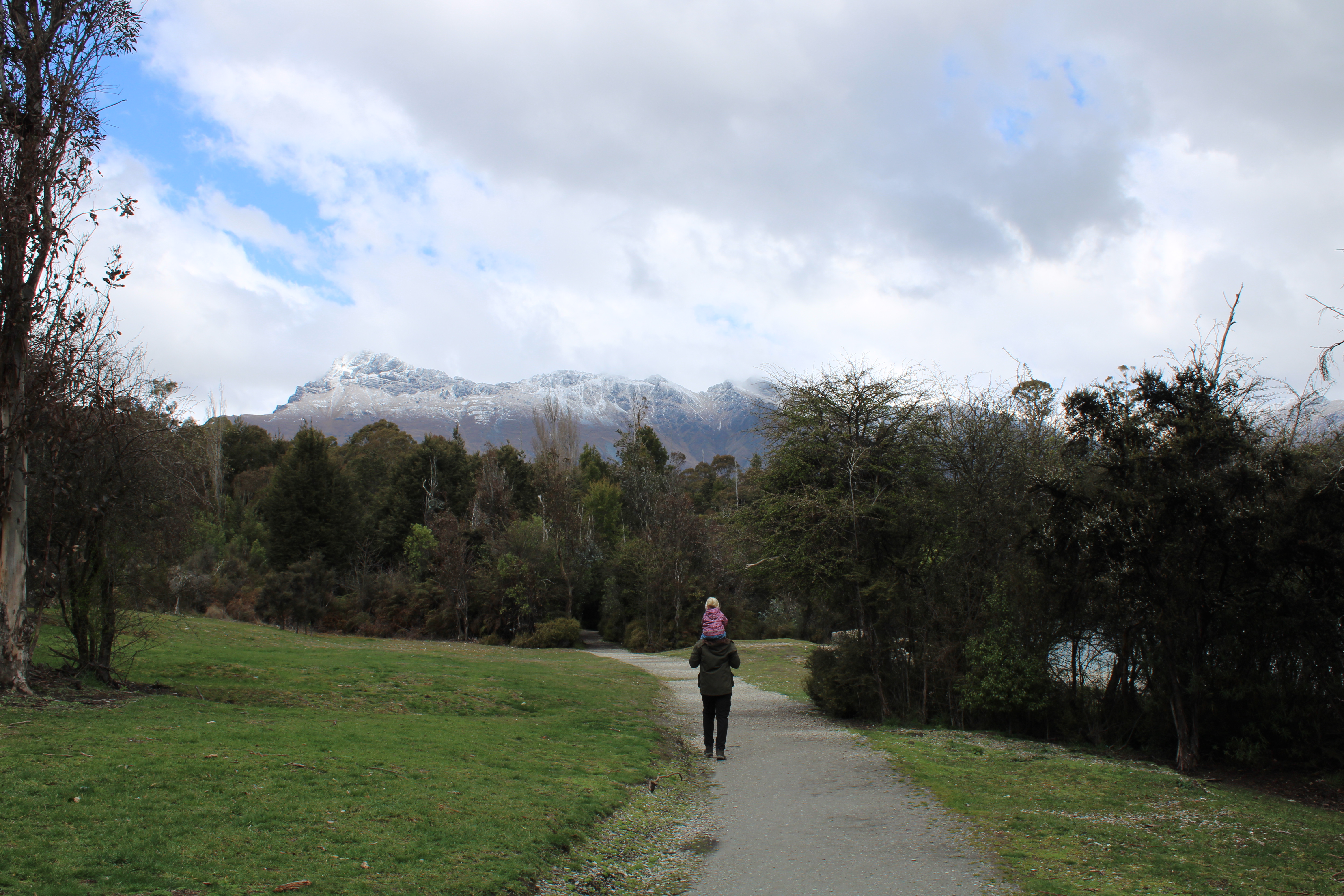
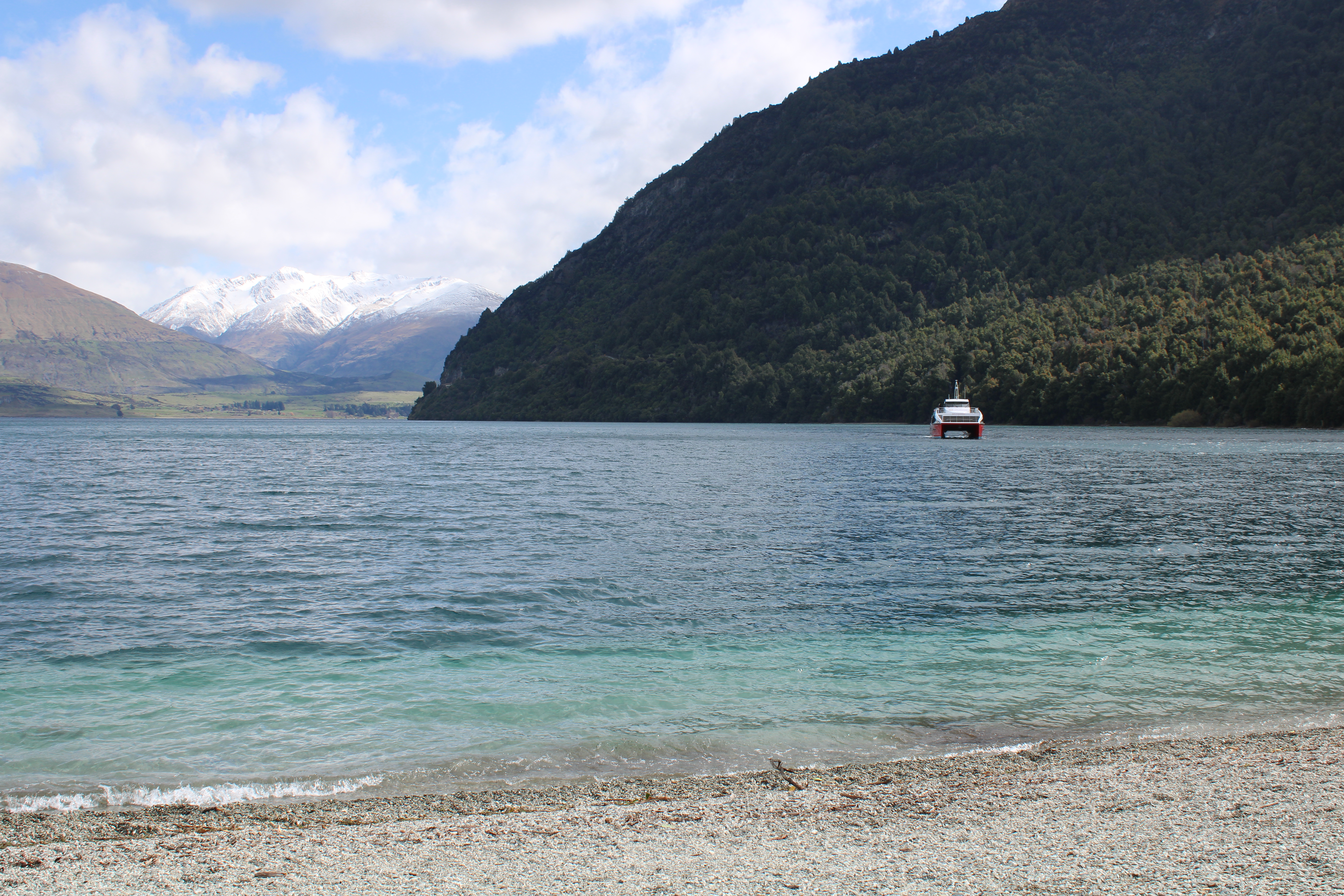
Travelling around New Zealand is a once in a lifetime adventure for many, and what better way to experience its breathtaking beauty than a 24-day road trip in a camper van. There are lots of different airports that you can fly into in New Zealand, but the main ones are Christchurch and Queenstown In the south, and Wellington and Auckland in the north. Take a look on skyscanner.com to find the best times and prices for you!

This itinerary is based on flying into Christchurch and out from Auckland. We rented our camper van through Britz; they picked us up from the airport in a minivan and took us to their office to pick up our camper.

We went with our 2-year old daughter, so all of the days and experiences are completely child/toddler friendly! If you’re planning on travelling with a child, take a look at our Downloadable New Zealand Activity Pages and Travel Journal to keep them entertained on the journey and give them an insight into the culture before you go!

*This site contains product affiliate links. We may receive a commission if you make a purchase after clicking on one of these links.*

WAIT! Before you begin planning your route, why not take a look at Everything You Need to Know Before Travelling New Zealand!


SOUTH ISLAND


Day 1 & 2

LAKE TEKAPO

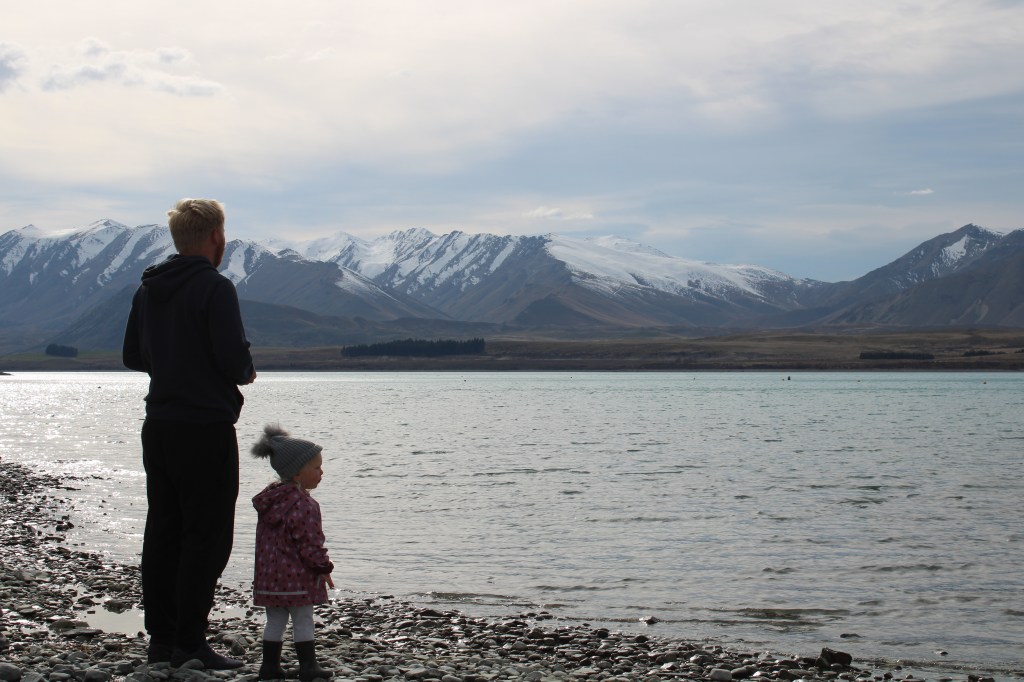
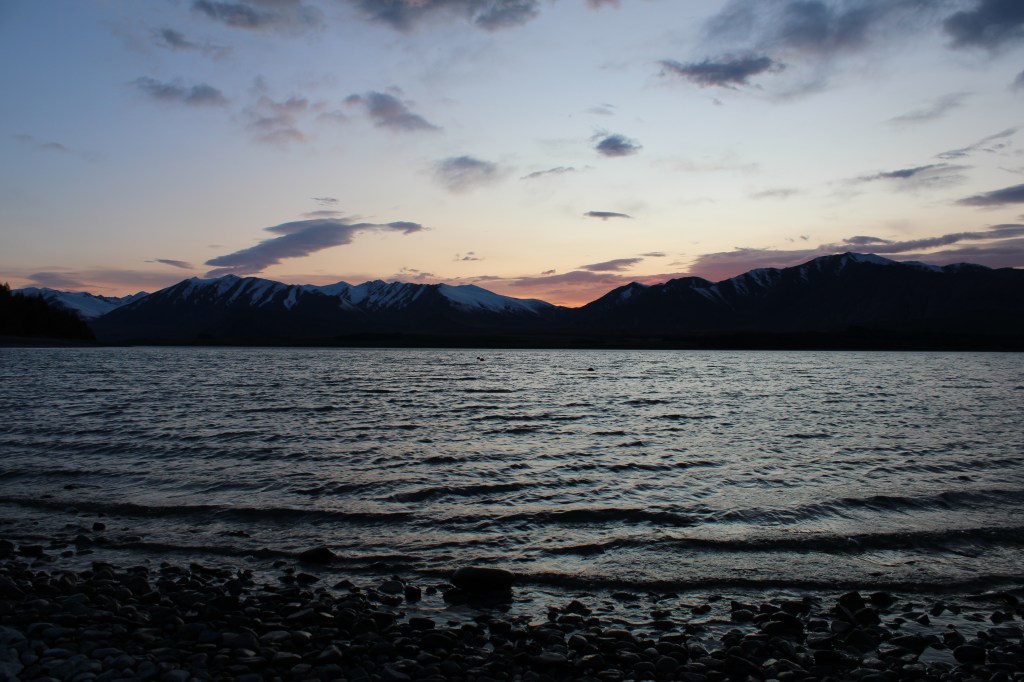
The first place to visit is Lake Tekapo, just under 3 hours from Christchurch Airport. Its beautiful clear blue waters are surrounded by mountains and trees, and it’s the perfect way to relax into the trip. We originally thought about staying in Christchurch for the first night and onto Lake Tekapo for the second, but in the end we wanted to get straight into the peace instead of staying in a city and there wasn’t much that we wanted to see in Christchurch (although this is also an option if you wanted to break the two days up). Lake Tekapo is in the middle of a dark sky reserve and the sky is stunning at night. Even if it’s chilly, it’s definitely worth spending some time outside in the dark to appreciate the stars!
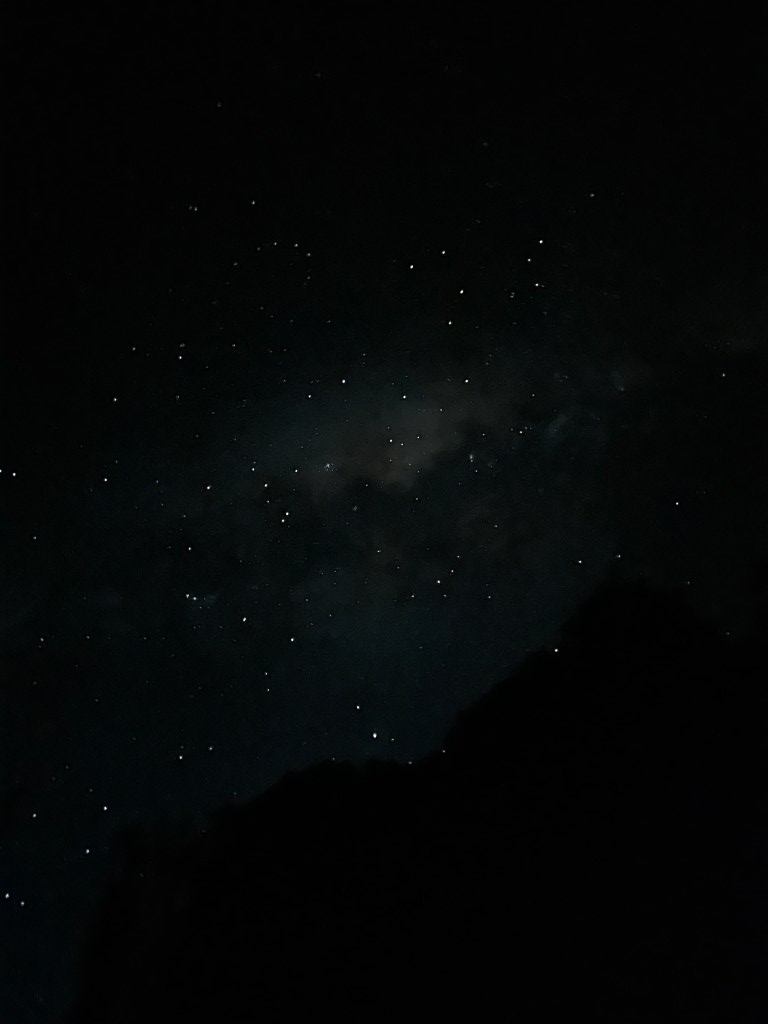
Starry night at dark sky reserve, Lake Tekapo, New Zealand

There is a huge stone ‘beach’ area around the lake and lots of opportunities for walks, as well as a few shops and cafes. The best campsite here is Lakes Edge campsite which was actually one of my favourites from the whole time we were in New Zealand (although I’m not sure if it was maybe just the fact that it was our first stop and was a bit of a novelty at the time?).
Other than relax and soak up the stars, there’s also Tekapo Hot Springs which is only a 5 minute walk away from the campsite. It’s got different temperature pools sat up in the rocks with beautiful views over the lake and the mountains. It costs only $35NZD per adult, and $20NZD for children (under 2’s are free – one of the great ways of travelling cheaply with a child!), and you go in and out as many times as you want all day.
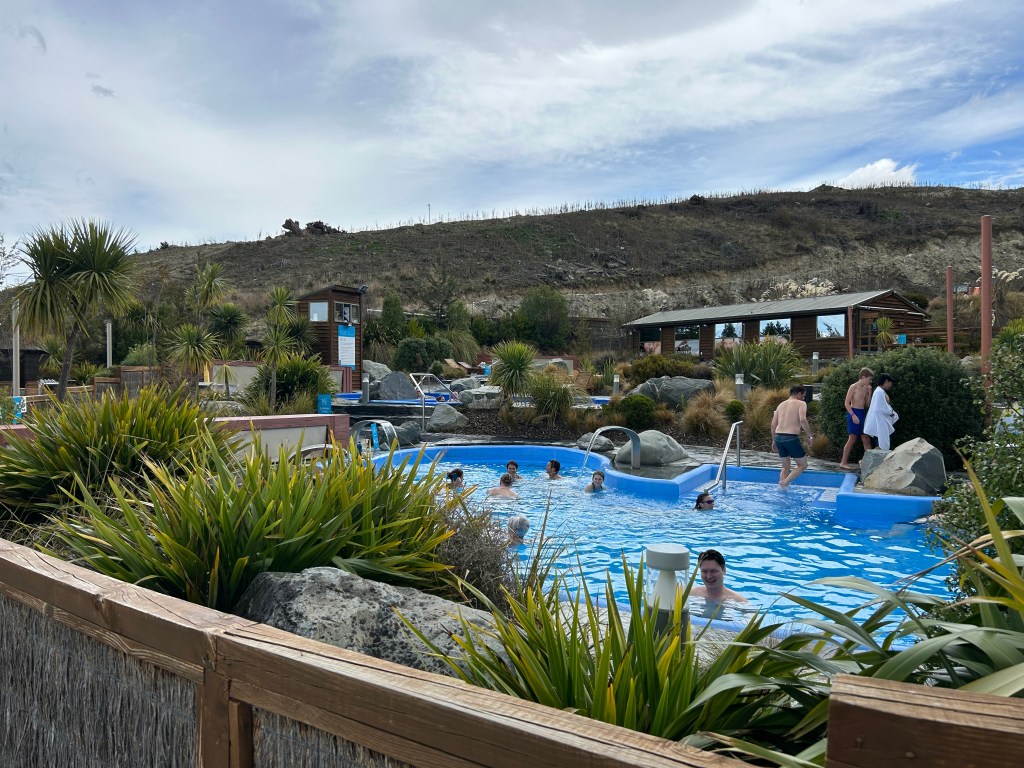
Tekapo Hot Springs, New Zealand

Day 3 & 4

QUEENSTOWN

We woke up early on the third day and travelled to Queenstown which is a beautiful 3 hour drive. There are loads of places to stop and get some great pictures as the scenery through Lindis Pass was amazing. We took our time travelling that day and stopped at some of the scenic picnic spots to pull over and have some lunch. We arrived into Queenstown at around 2:30pm and had a jet boat ride booked at 3, so we parked in the car park on Boundary Street as it’s only a short 10 minute walk down to the harbour. 
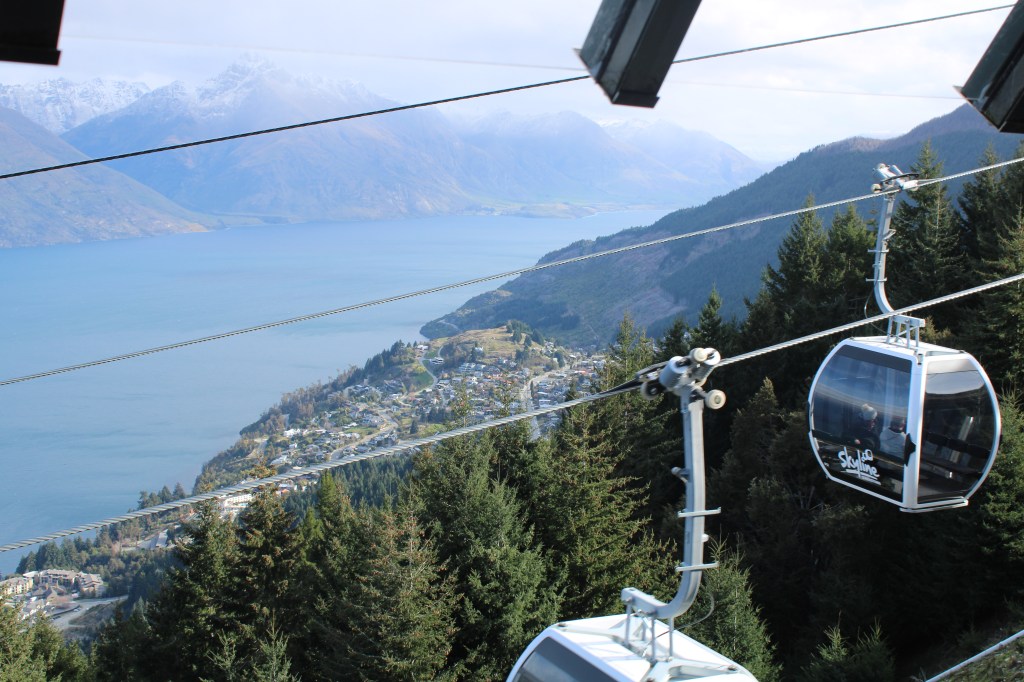
View from Queenstown's Cable Cars, New Zealand

We stayed at the Qbox campsite as it seemed to be the only one within walking distance of the main town, but there were some other cheap/free ones on the roads surrounding the town that looked quite good if you’re on a budget and are happy to drive in and out of the town (it’s best to check on CamperMate). The campsite was pretty bumpy and not as convenient as some of the others we stayed at, but it had all the amenities we needed and was a 20 minute walk from the town (downhill, which is great on the way down but maybe not on the way back up again!). 

One thing to note is you should always allow PLENTY of extra time for the journey, and don’t rely on the timings of Google Maps. Either the rain or the wind slows you down, or it doesn’t take into account all of the speed restrictions of a lager vehicle around all the sharp corners. A few times on our trip we thought we’d left loads of time but by the time we’d dumped and filled up with water, we left later than we planned and we only just made it in time for the things we had booked. Also, if you stop and cook for lunch, you then have to wash everything up and put it back safely before you can carry on driving, so just bear all of this in mind when planning your days out.

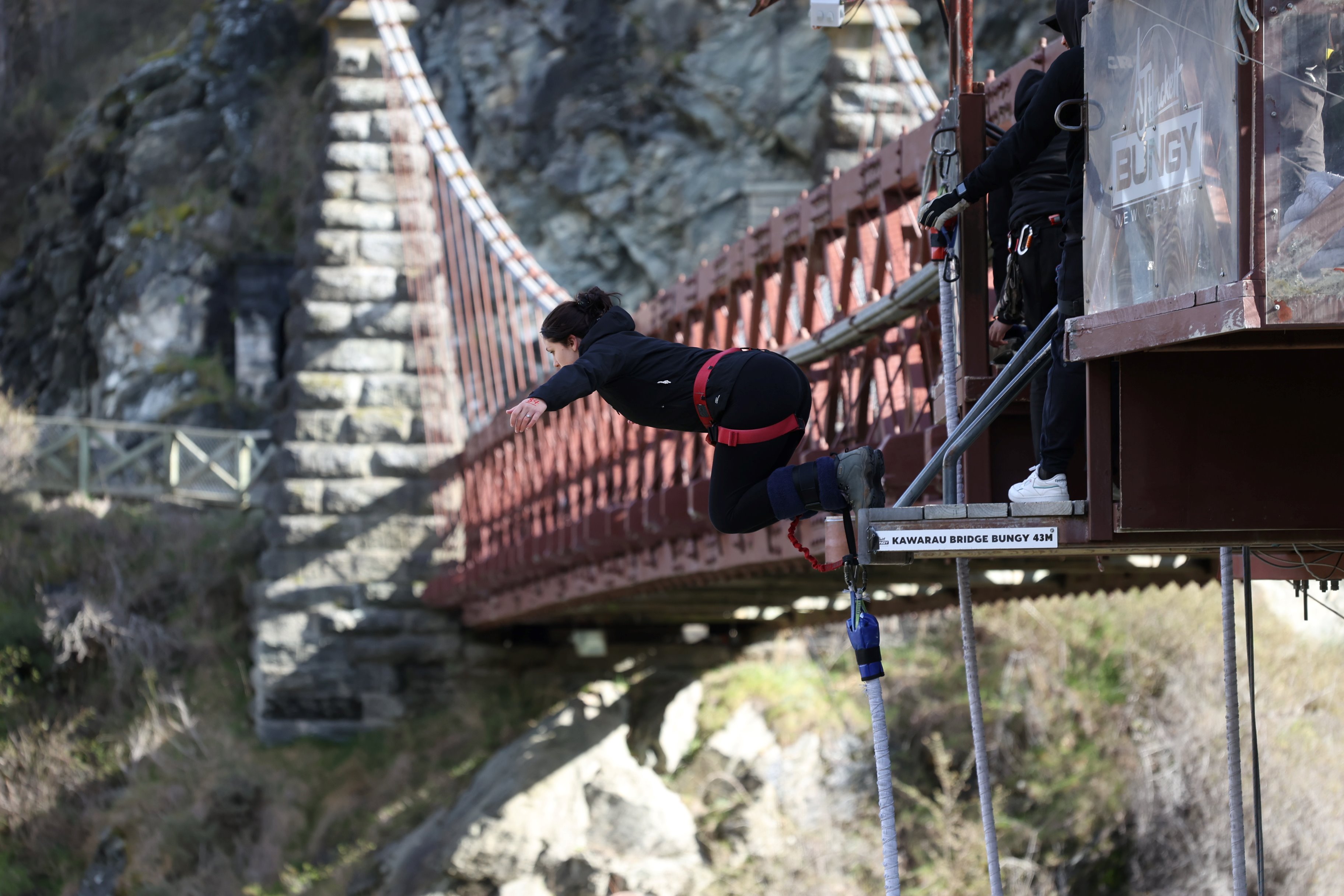
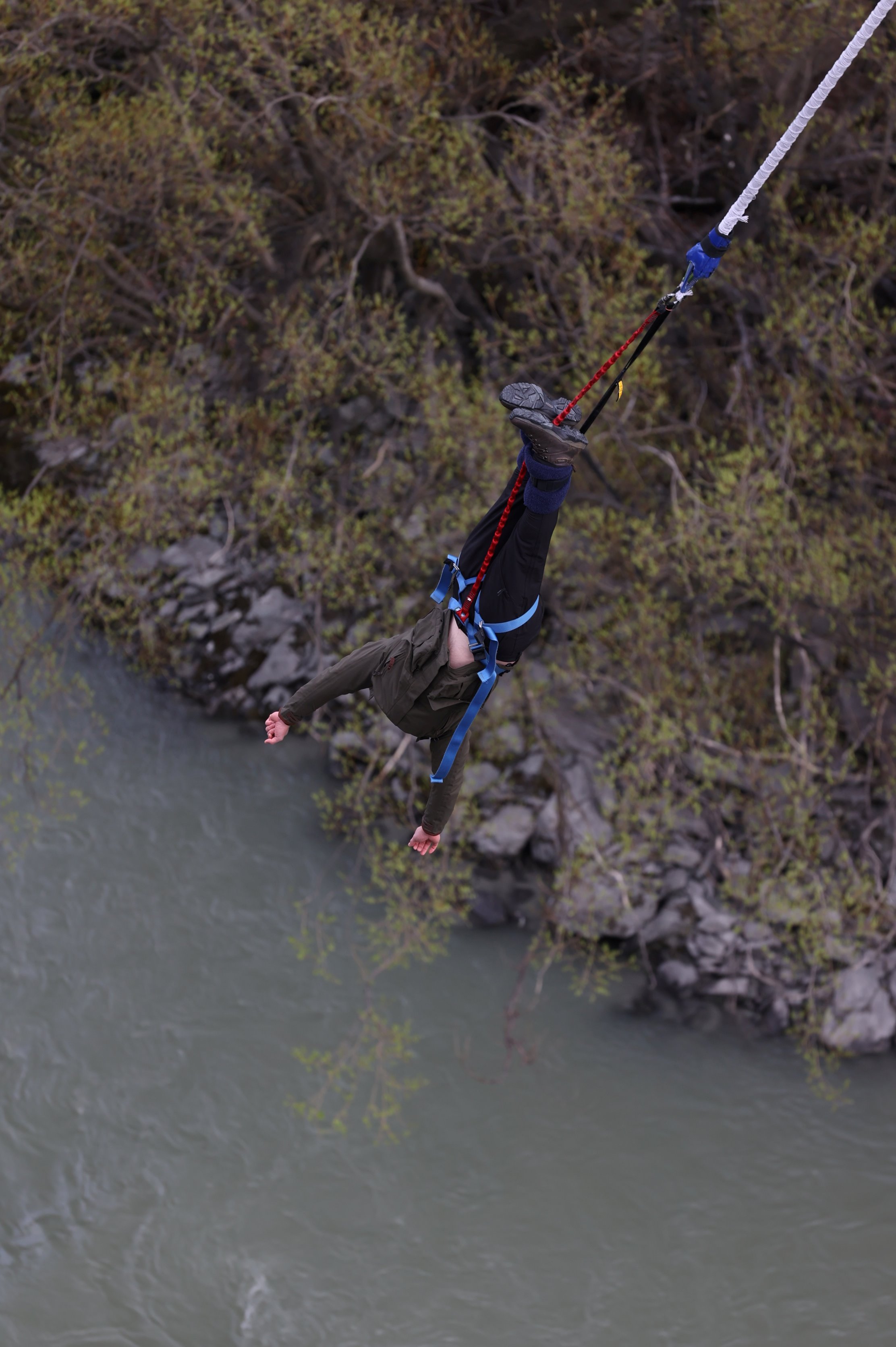
Queenstown is a really quirky town and has some great bars and restaurants, like Whakatipu Brewing Company which had a selection of craft beers and sports on the TV. The food wasn’t anything amazing but it’s a perfect place to stop for a drink. There are loads of things that you can do here which is why we wanted to stay for a couple of days, like the cable car as well as Queenstown’s real bread and butter; a Bungee Jump (come on, you can’t visit the home of the bungee without giving it a go!).

We did the AJ Hackett Kawarau bridge jump which is 43 metres high over the river, and is the first ever bungee jump! On a good day it’s a really beautiful place for a jump, but I’d advise to do it first thing in the morning if you’re nervous about it so that you get it out of the way. Also, it might be a given, but maybe avoid breakfast beforehand… It cost $570NZD for two adults, and this included some photos and a video of each of us jumping.
 

Another thing we did in Queenstown was a jet boat ride over the Shotover River that we booked through Get Your Guide which we did with Adelaide. For the first 10 minutes she was completely silent and we felt like terrible parents, but after a while she started asking to ‘do more spins’ and ‘go faster’ so we realised she wasn’t actually terrified and had a really good time. They do say it’s only for over 2’s and I would say maybe that’s a bit young for them to go on if they get scared easily but if you’re both confident then give it a go!

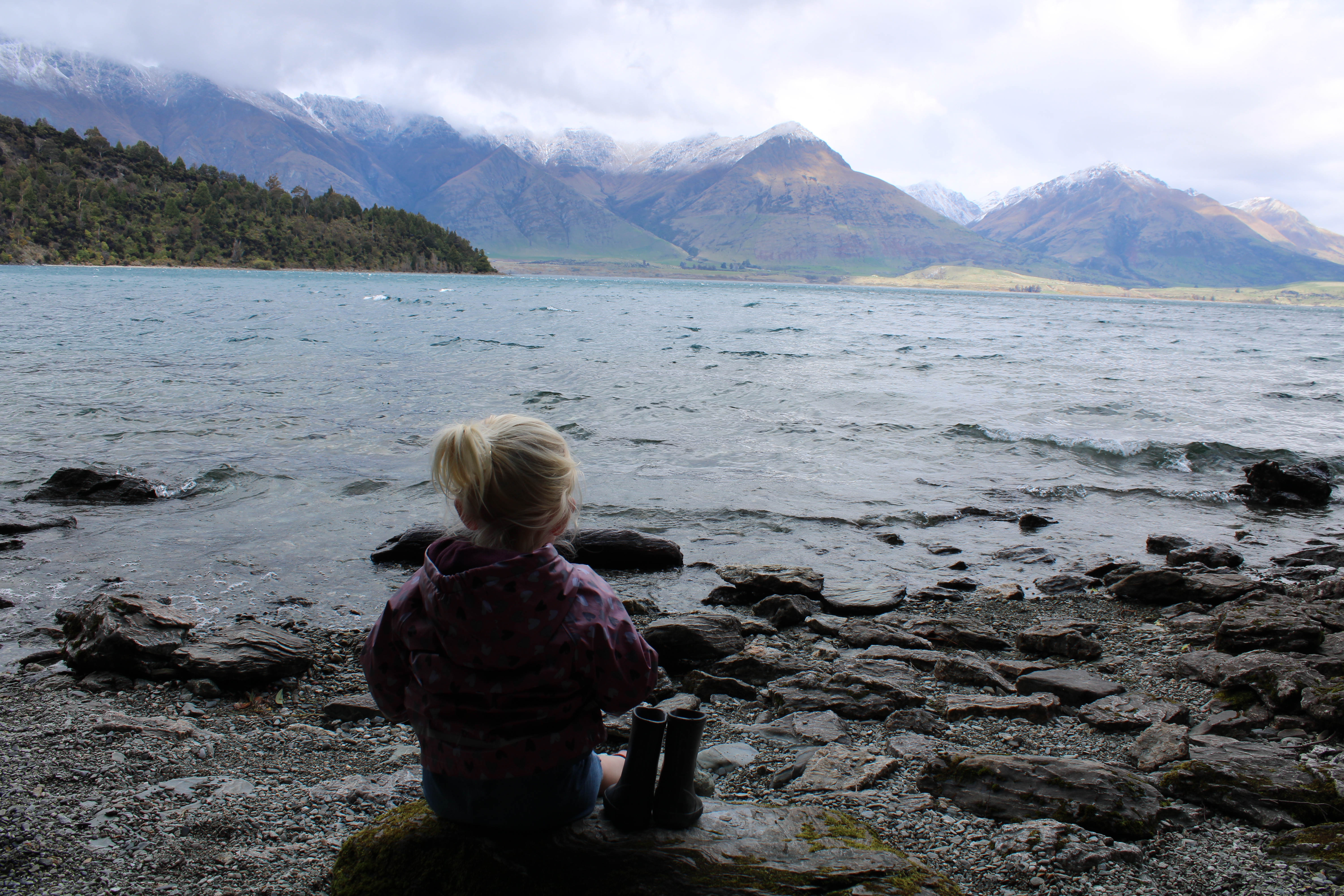
After we did the Bungee on the second day, we drove out towards Gelnorchy to visit Bob’s Cove and stopped for a picnic at Wilson Bay which was perfect to park the camper right next to the lake and sit out in the sun at the benches. There were toilets and bins here as well if you aren’t travelling self-contained! The parking for Bob’s Cove was quite tricky to find, but click here to take you to the location on google maps. The walk itself is very easy and is about half an hour or so to get down to the cove and around to the car park again.

 

Day 5

MILFORD SOUND

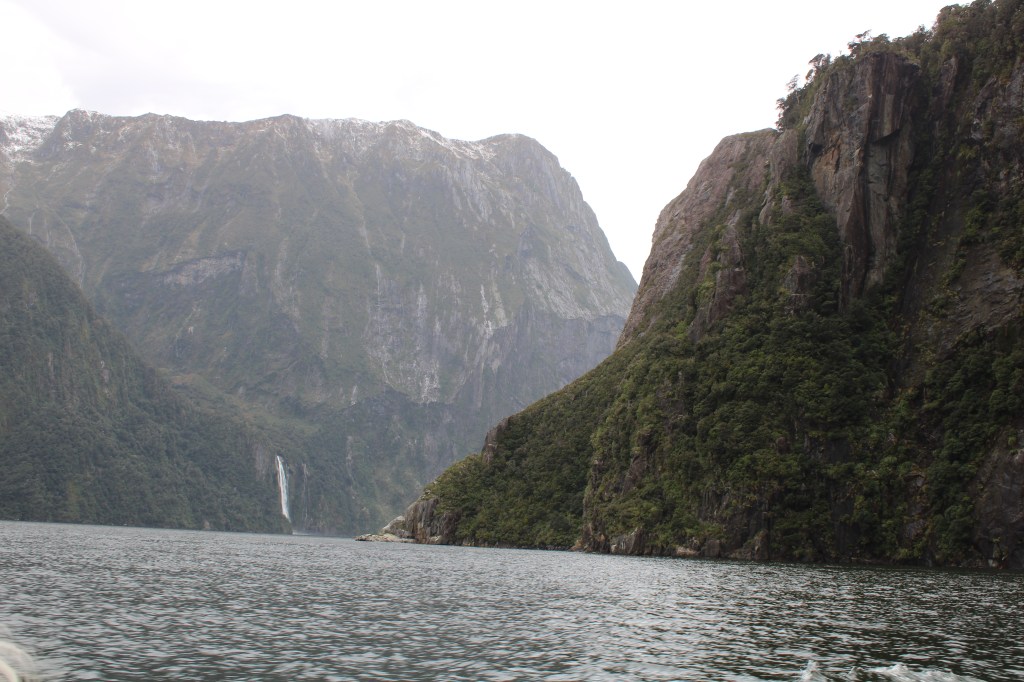
If you tell anyone you’re visiting the South Island, you’ll no doubt be asked if you visited the incredible place that is Milford Sound. The almost 4-hour drive has a huge mix of weather as you drive through flatlands, snowy mountain-tops and through a mountain tunnel to the ever-rainy town. There isn’t a huge amount to do here, other than walking trails and a boat trip (which is the main reason you’d come here). There are loads to choose from but we picked this boat trip from Get Your Guide – it was one of the smaller boats and it gets really close to the waterfalls (I say ‘really close’ – it basically goes right underneath it; you get soaked if you stand outside!). 
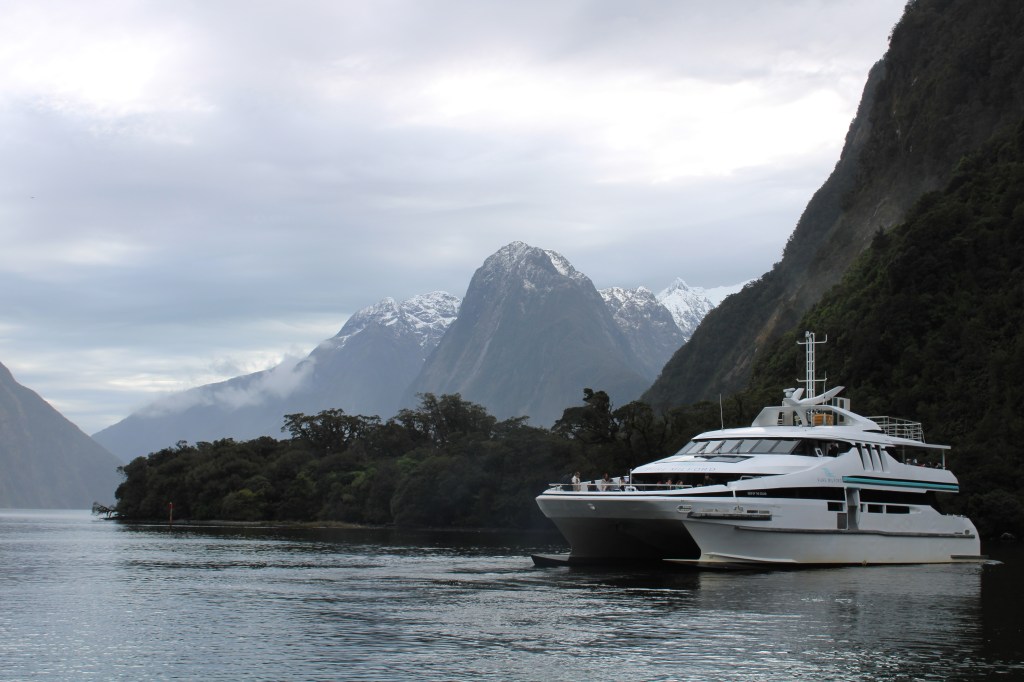
Milford Sound waterfall in New Zealand - Milford Sound: 2-Hour Small Boat Scenic Cruise in spring

There’s a car park right by the water, but it costs to park there. There’s another car park a 10/15 minute walk up which is free called Deep Water Basin car park. There’s only one campsite in Milford itself, which happened to be fully booked when we were looking to stay, but in hindsight I’m glad. Cascade Creek is about 45 minutes away and is not only a lot cheaper, but is also perfect for a raw ‘in nature’ camping experience. It’s in the middle of nowhere, with mountains around and a river running through. There are toilets here (they aren’t great, needs must…) and it’s just so peaceful! The site is really big and there’s so much space; it was comforting to know there were other campers around when we were in the middle of nowhere, but everyone was so spread out that you had a lot of privacy. 

Day 6

WANAKA

The drive from Milford Sound to Wanaka is quite a big one – 4 and a half hours roughly. You quite literally drive all the way back to Queenstown and around up to get to Wanaka. TIP: If you’re in a larger camper van/motorhome, you aren’t allowed to drive along certain roads that Google Maps will try and take you along. It will try and get you to cut up to Wanaka near Arrowtown, but instead drive to Cromwell and then on to Wanaka from there.

A lot of people that we spoke to when we were travelling NZ said that Wanaka was their favourite place to visit but we didn’t feel the same. The scenery is beautiful and the lake is peaceful, plus there’s plenty to do. There are 2 different islands on the lake that you can visit via boat as well as watersports, skydiving and cycle paths. The best boat trip that we found was this Wanaka: Water Taxi & Mou Waho Island Tour from Get Your Guide. Mou Waho island has a lake within a lake and gives you some great Insta-worthy shots!
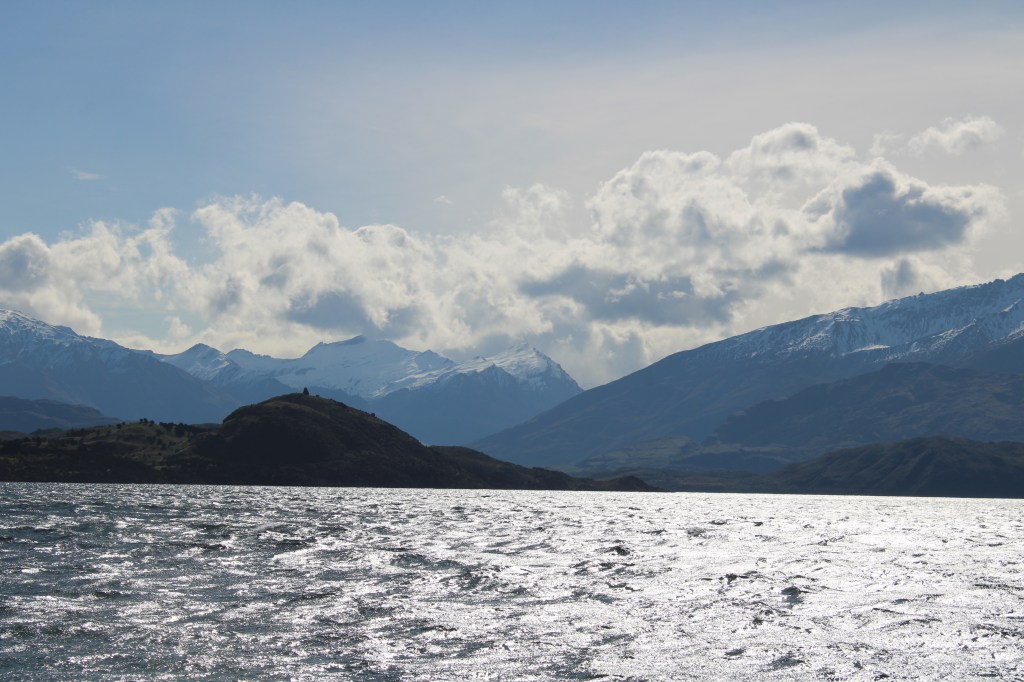
Lake Wanaka, New Zealand in spring

There are lots of other things to do, but the most popular part of Wanaka is ‘That Wanaka Tree’. I’m sure you would’ve seen the famous pictures before of a small, crooked willow tree poking up out of the water with mountains in the background? It’s not much more than that really, and if you don’t see it, don’t feel like you’re hugely missing out as it’s pretty much exactly like the pictures. There’s a spot to park right by it, so if you’re just passing through you can pull over to have a look and keep on driving.
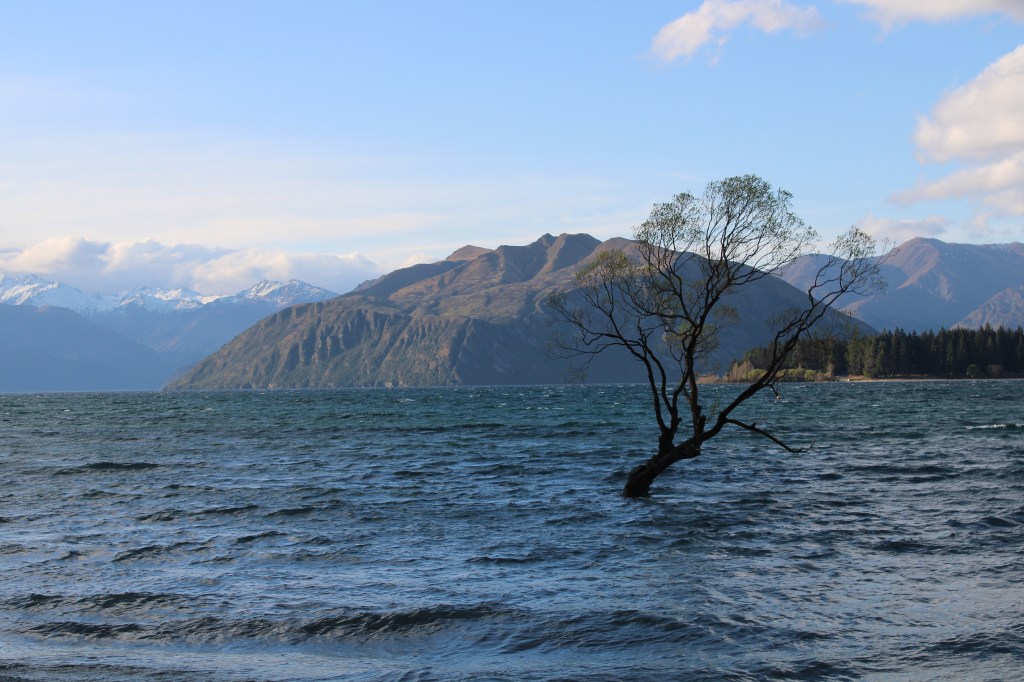
That Wanaka Tree, New Zealand in Spring
Day 7

FRANZ JOSEF

(Because of a storm, we sadly didn’t make it to Franz Josef on our trip and instead had to do a 400 mile detour back through Christchurch to catch up with our itinerary the following day. This is the itinerary we had planned to follow and the activities we wanted to do). 

The drive between Wanaka and Franz Josef is about 4 hours and takes you right past Fox Glacier. There are lots of different glacier tours and walks that you can do, but the other main reason we wanted to come here was because of the Waiho Hot Tubs; private wood-fired hot tubs nestled in the middle of the rainforest. We had reservations for here that we sadly had to cancel because of our detour, but the company were so lovely about it and we were gutted we didn’t make it! Another thing we had on our list was kayaking on Lake Mapourika; we explained we had a toddler with us and they were perfectly happy that she could come along!

Day 8

PUNAKAIKI
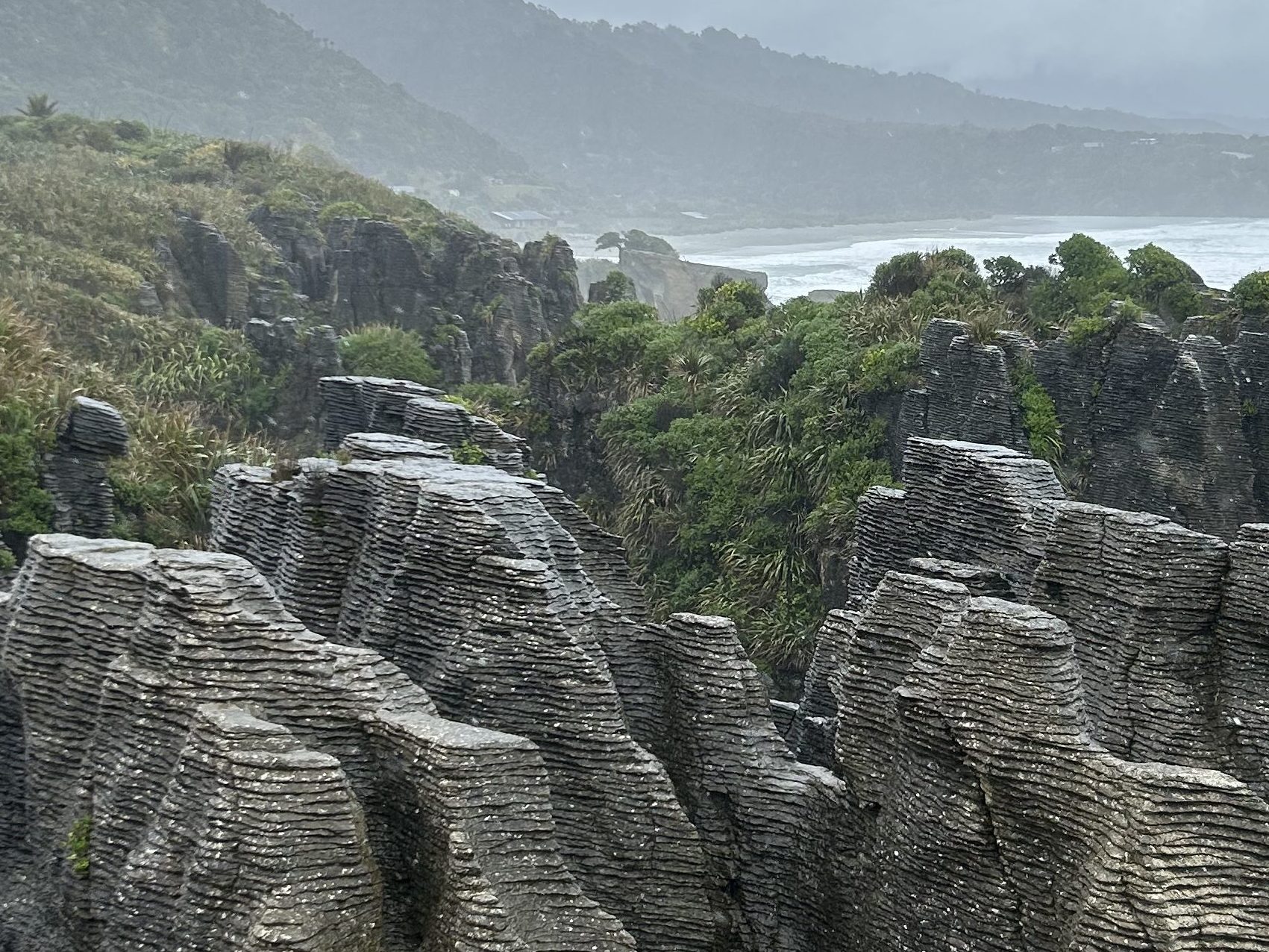
Punakaiki pancake rocks in New Zealand when raining in spring

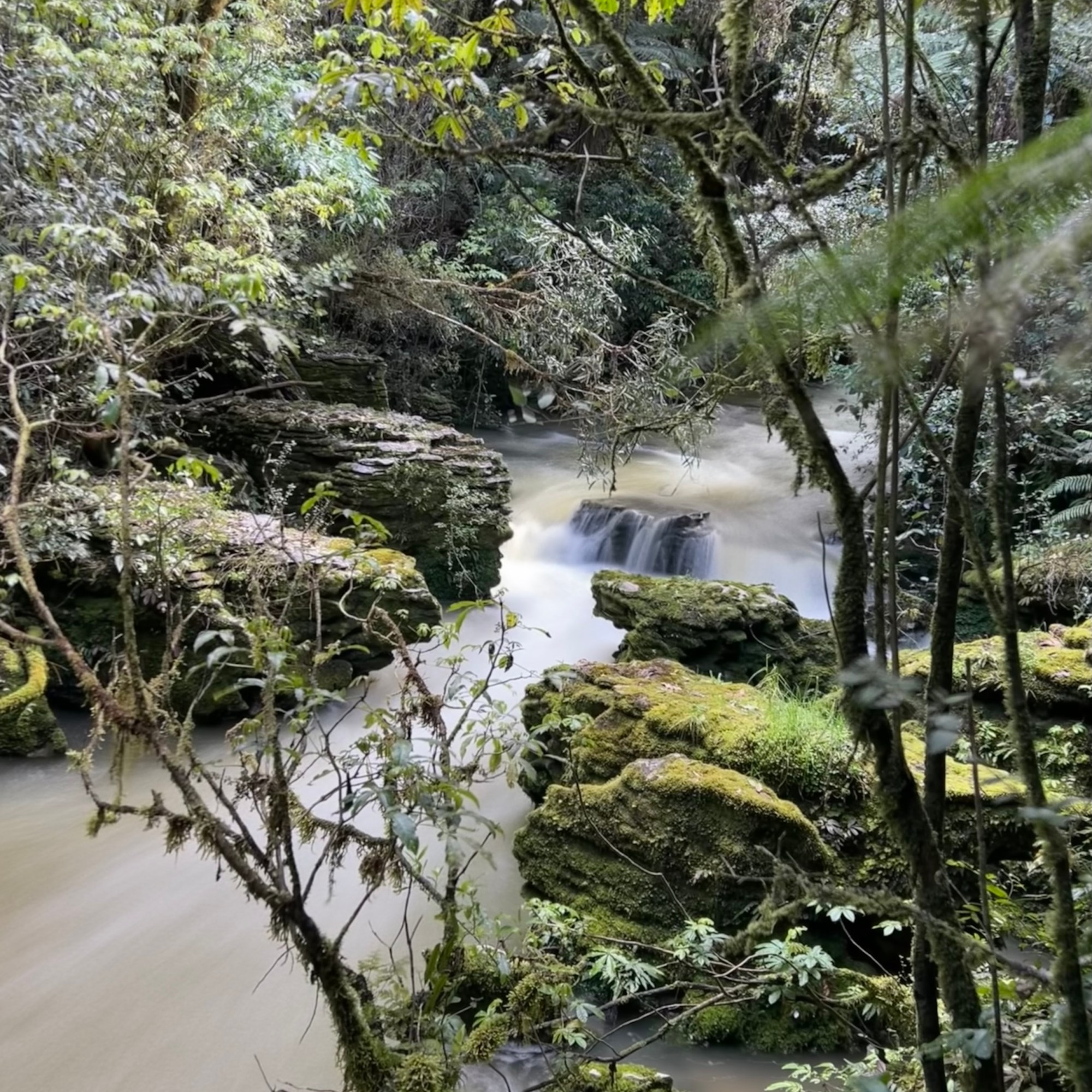
The 3-hour drive up the west-coast is supposed to be one of the most beautiful in New Zealand. Crystal blue waters and luscious green forests line the sides of the roads and creates a very instagrammable journey. When we visited, the weather was awful and it was a pretty miserable couple of days. It rained the whole time and was pretty windy, so we didn’t get the ‘West Coast’ people often talk about. It was still really interesting seeing the Pancake Rocks and blowholes, but there wasn’t a lot else for us to do here other than stay warm and dry. If you’re going in the warmer months then I’m sure it’s a beautiful beach area, but for us in the first weeks of spring, it wasn’t ideal and we carried on driving to find a ‘free’ campsite to stay at a little more inland.
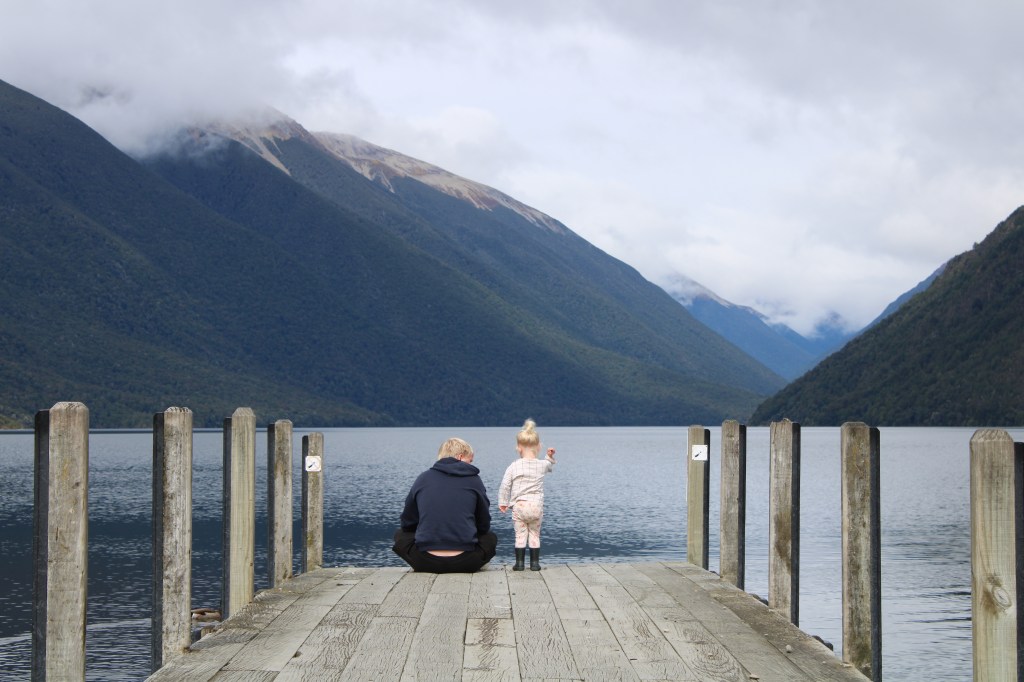
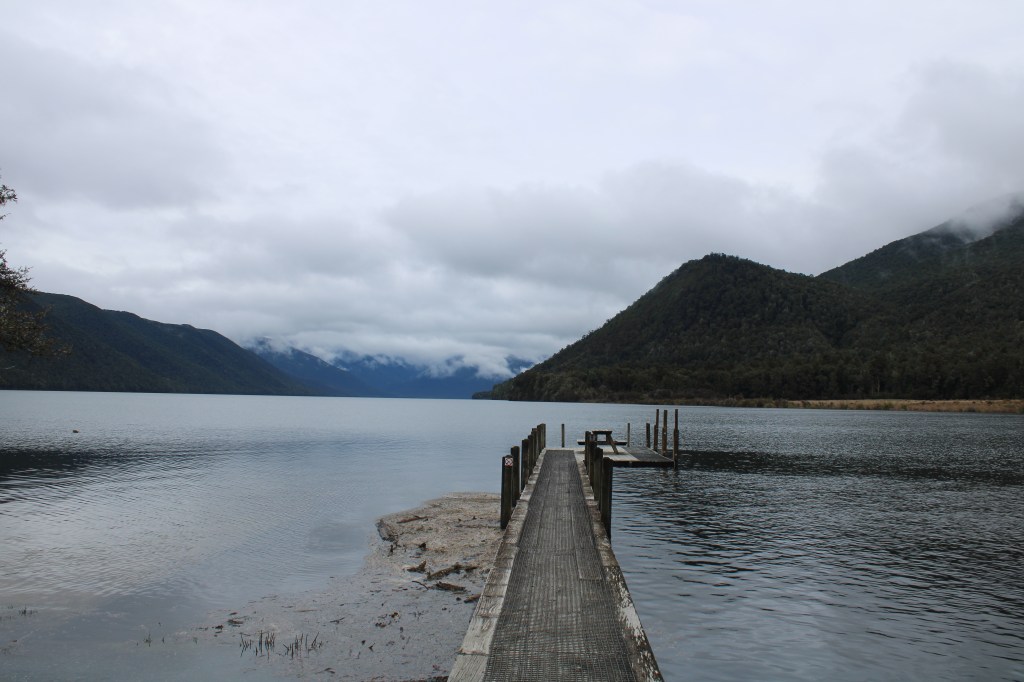
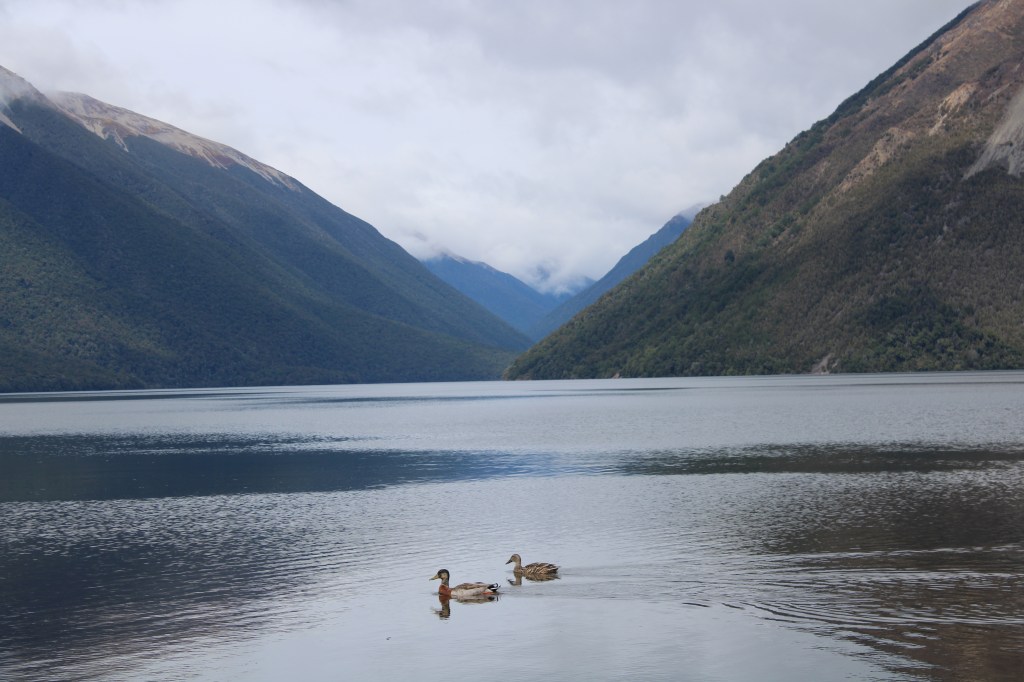
On our way north we stopped off at Lake Rotoroa and Lake Rotoiti. They were so peaceful first thing in the morning, but there were lots of sandflies around so make sure to bring bug repellant. 

Day 9 & 10

ABEL TASMAN/ MARAHAU
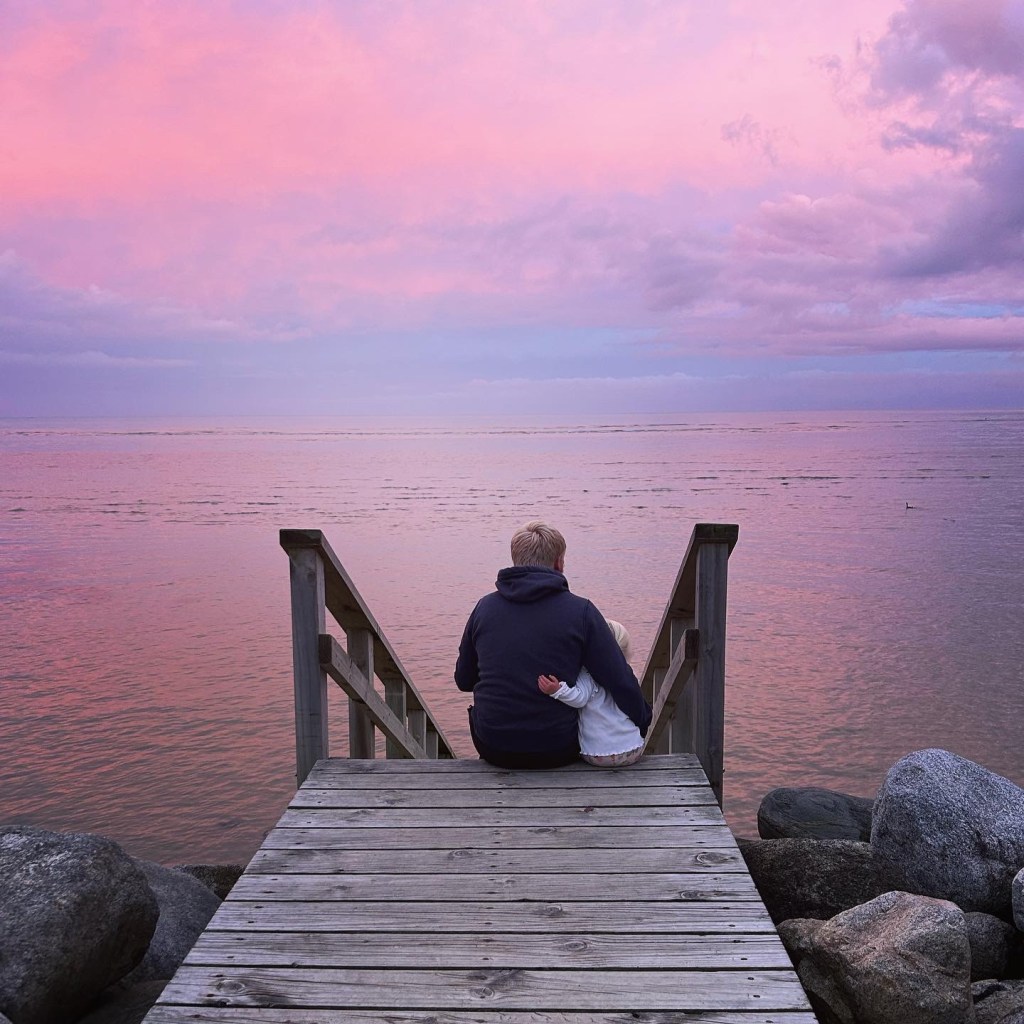
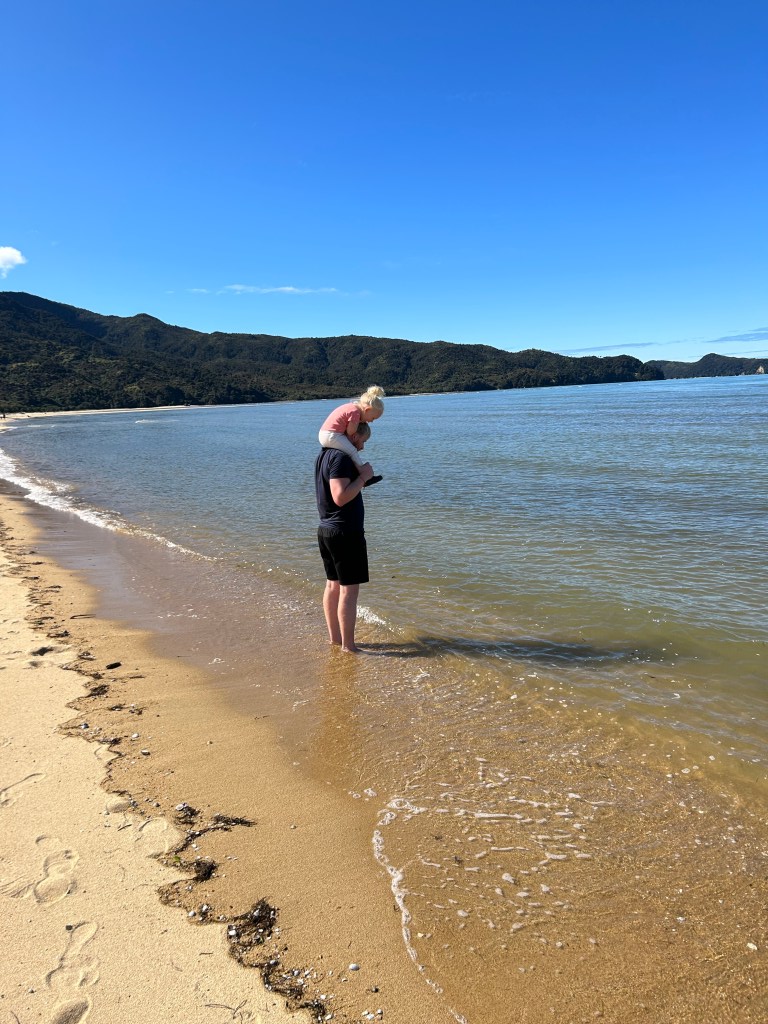
Abel Tasman National Park, New Zealand Candyfloss Sunset. Pink Sky in Marahau.

The drive to Abel Tasman was beautiful and green; twisty-turny and slow in places (the steep climbs up and down around the coast can slow you right down if you’re in a larger camper). There were quite a few places you can stay around Abel Tasman National Park; the ideal place to stay is Totaranui camping area, but it’s quite a long drive and a bit too far north for what we wanted so we stayed in Marahau instead. There was a beautiful beach, a lovely little bar/restaurant called Hooked and some great places for bush walks into the national park. We spent 2 days here at the Marahau Beach camp which had lovely clean showers, toilets and washer/driers. It wasn’t a very big camp but it had a little play-park for our toddler to play in which was a bonus!
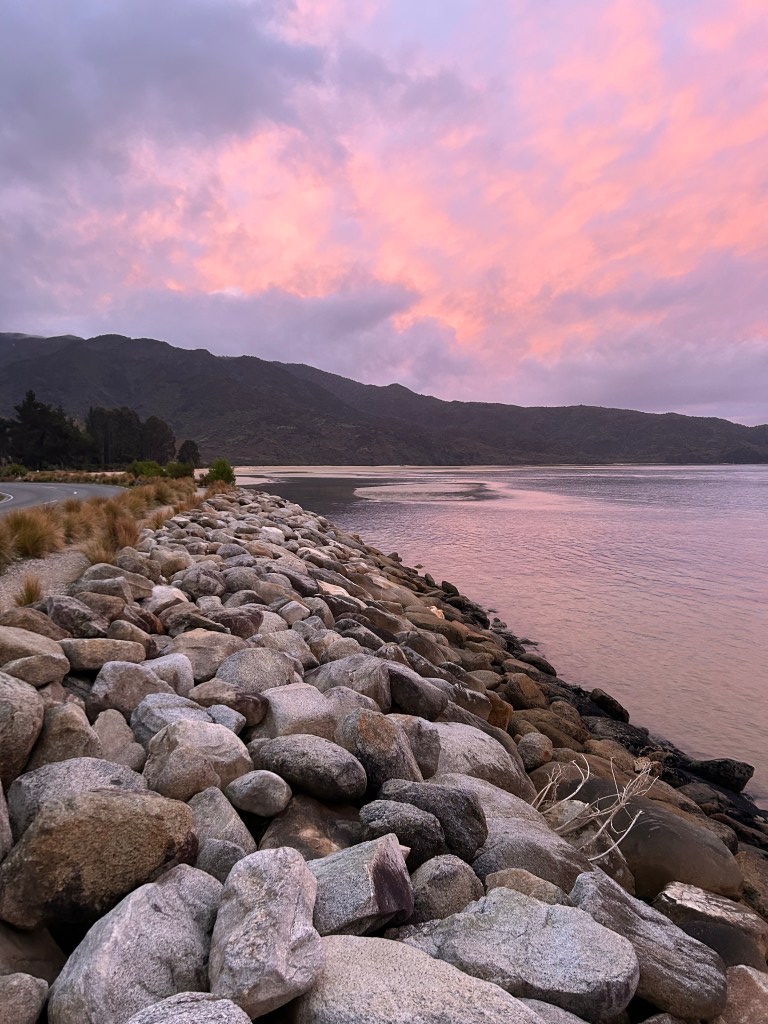
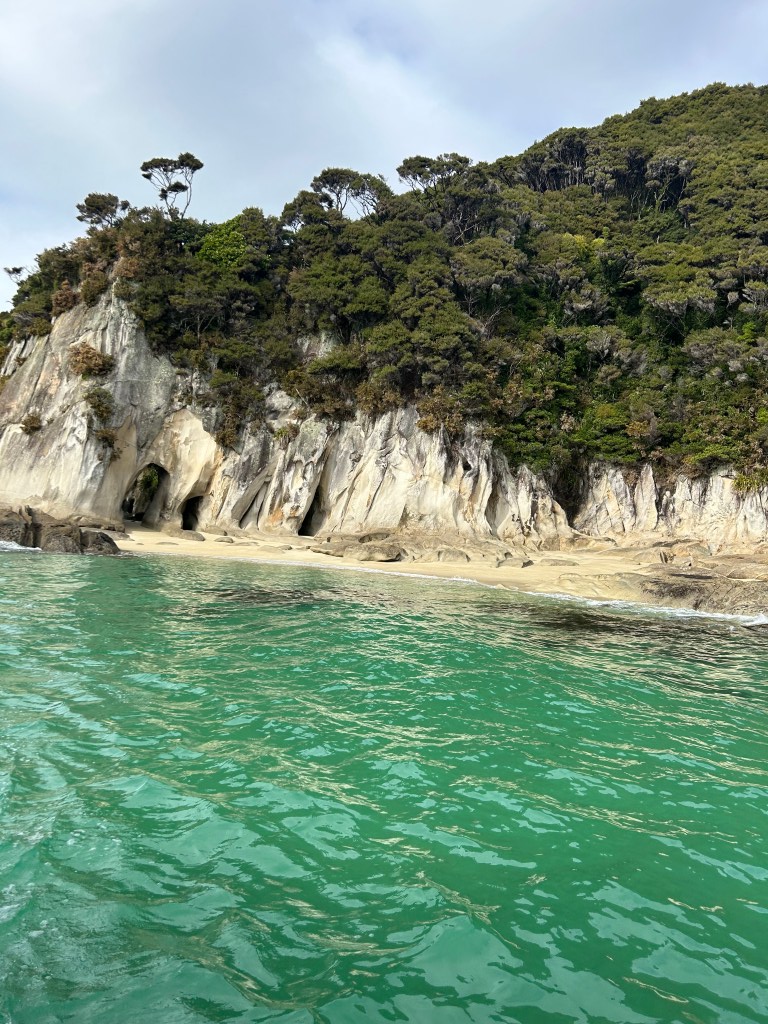
We booked an Abel Tasman National Park Scenic Cruise through Get Your Guide which took us on a 3-hour boat ride around the waters of the park, seeing some of the wildlife and stopping off in different bays to learn about the history. There were other options of water taxis too so you could spend the day on one of the many secluded beaches, or they drop you off and you do the long bush-walk back to Marahau!

Day 11

MARLBOROUGH

We planned our stop in Marlborough for 2 days because we wanted to chill out and sit on vineyards for 2 days and drink nice wine, but the reality was that it was cold and rainy, and because it was ‘off season’ a lot of the vineyards weren’t yet open. One that we were highly recommended was Bladen’s as it’s a nice family run vineyard with nice wine! Another which we actually did get to visit was Framingham’s which has a great wine tasting menu and a quirky set-up with lawn games outside in a large courtyard, and a cosy indoor bar for drinking in all weather.

We weren’t overly impressed with Blenheim itself as it’s pretty built up, but there are some gas stations with water and dump sites if you’re free camping, and there are some big supermarkets for stocking up on supplies. I’d recommend staying in amongst the vineyards in the surrounding countryside. We actually stayed at Clairvale Garden and Vineyard, parked up on someone’s driveway; the family was lovely and it was really peaceful. They had some sheep and chickens and let us use their beautiful garden! 


To get across from the South Island to the North, you have to catch the ferry from Picton which is about 20 minutes from Blenheim. The crossing takes around 3 hours, but can be longer in bad weather, which happens more than you’d think. The Cook Strait is often considered one of the roughest stretches of water as it’s the only gap between the mountains in the North and South and creates a wind tunnel, resulting in some crazy waves. Don’t be surprised to experience swells of 3-4m in bad weather. (You wouldn’t think a large ferry could move so much but trust us, it does. Take travel sickness tablets if you’re prone to it!). 

The price varies a lot depending on type of ticket you get and whether you’re a foot or car passenger. The two ferry companies are Interislander and Bluebridge so check the cost for each to see what they offer! I definitely recommend booking your ferry in advance as they can get pretty full up, and you’re pretty stuck if you can’t get across!


NORTH ISLAND

Whilst New Zealand is generally super safe, there are some bigger areas (especially in the north island) where there’s more petty theft and gang crime so just make sure to keep your wits about you.

Day 12

WELLINGTON

As the capital, Wellington has lots of bars & restaurants, and is a great place to go for some nightlife. It’s also got a great ‘cafe culture’ and serves up a tasty brunch, so it’s a lovely place to break up the camper life and treat yourself to a day in civilisation. Wellington has a buzzing art scene and is home to many museums and galleries including the Museum of New Zealand Te Papa Tongarewa. The cable car takes you up to the cable car museum, the observatory and the botanic garden. There’s loads to do here, but sadly we missed out on Wellington due to storms stopping the ferry services for 24 hours. If you have the time, it looks like it’s worth the visit – just take a look at Lonely Planet’s must-see attractions.

Day 13

RUAHINE RANGES

As we got close to the ranges, things started to feel a lot more rural again, just like the South Island. We got further out of the towns and cities, and into the secluded hills and tracks where there were just hundreds of sheep and farmland around us. The place we visited was called Makoura Lodge, which has a variety of accommodation and activities such as shooting, archery, axe throwing and mini Highland Games. It’s great for groups and team-building, but it was also nice just the 3 of us as it was really quiet and the people were so lovely and friendly! They don’t offer camping here, but just 10 minutes down the road is a village called Apiti with a couple of camping options.
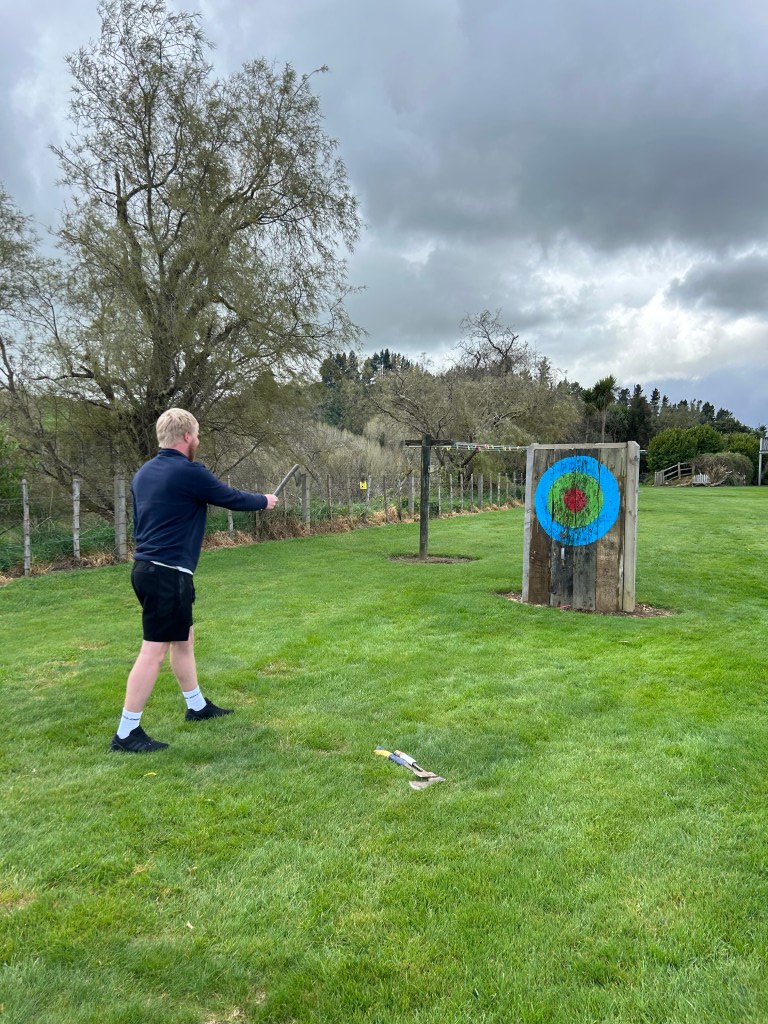
Axe Throwing at Makoura Lodge, Ruahine Ranges, New Zealand.

The Apiti Tavern is owned and run by a really lovely man called Jon, and his family (Jon gave Adelaide a little yellow toy car when we were there which we took on the rest of our travels!). Around the back of the tavern are some tennis courts that you can park up on, plug into the electric and spend the night in the tavern enjoying some great food, drinks and atmosphere!

DEFINITELY stay at the Apiti Tavern if you’re in the area  (if you want to book ahead, you’re better off calling than emailing).

Day 14

TAUPO

Lake Taupo is a really nice modern area around a beautiful lake. If you do go to Taupo, Huka falls is a must! The water is an incredible icy-blue and it’s beautiful. There’s plenty of parking around here, but it was pretty packed when we went so be prepared for the crowds.
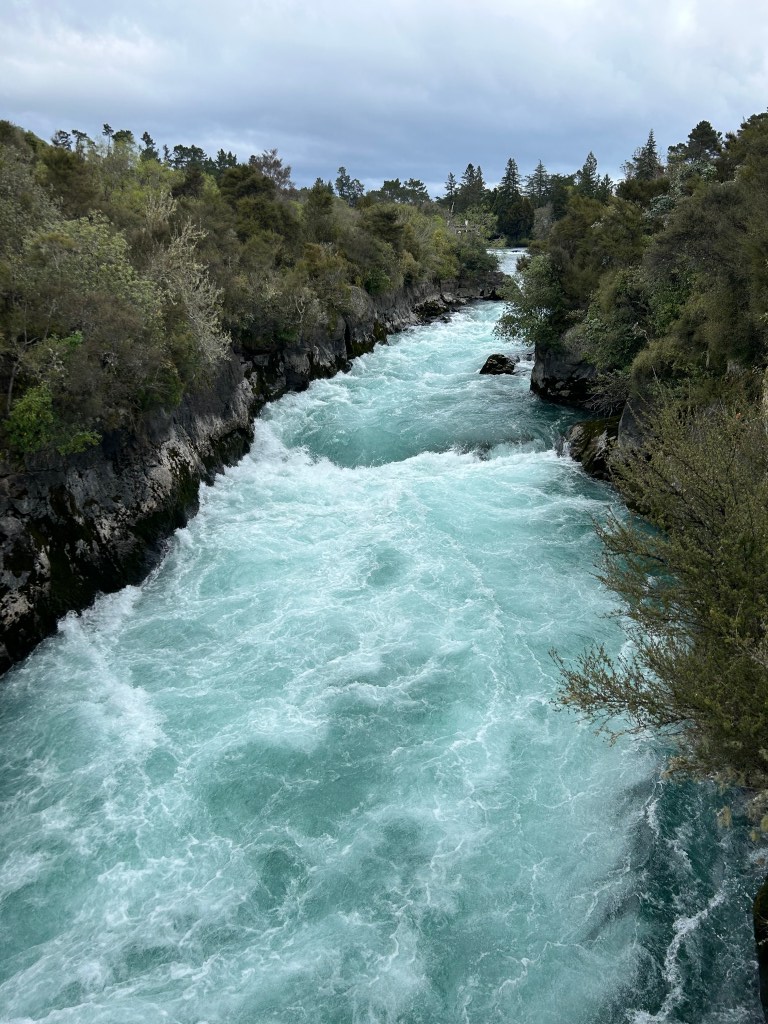
Huka Falls, Taupo New Zealand in September

Whilst we were in Taupo, we went to Otumuheke Stream which is a natural hot stream just off the Waikato River. There are changing rooms here and a small rock-pool area where the hot water mixes with the river and you can sit and bathe. I’m sure this is lovely in good weather, but it’s quite shallow and when we went in early spring, it was quite chilly sitting around for too long. Also, bring water shoes if you have sensitive feet as the ground is completely stoney.
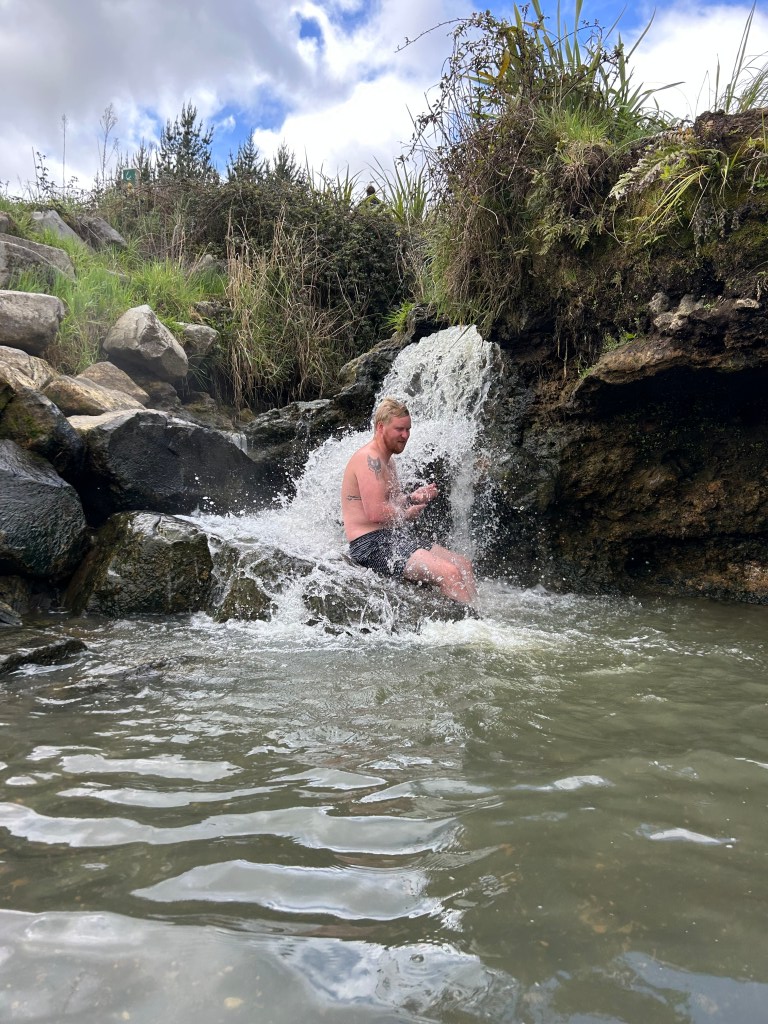
Sitting in the Otumuheke hot Stream in Taupo, New Zealand in September

We were planning on finding a free campsite here as we had 3 full days of a fully-serviced campsite ahead of us, but sadly there wasn’t a huge amount of choice for free camping here. Reids Farm was the main one, which looks to be a huge open space but when we got there, they had shut off most of the carpark and there was the tiniest, very uneven area which was already full. We decided to drive out for the night to Lake Okaro which was completely isolated and quiet, and right next to the water.

Day 15, 16 and 17

ROTORUA

One main thing to know about Rotorua is that it’s bursting with geothermal activity, meaning there are spas, pools and hot tubs everywhere! Whilst this might sound great, it’s worth noting that the town does have a slight smell about it… 

To say there’s lots to do in Rotorua would be an understatement. It’s one of the busiest places we went and there are so many activities set up here no matter what age you are. One of our favourite activities was Hells Gate Thermal Spa, which we chose partly because of the amazing reviews, and partly because it was the only place we found that our daughter was allowed in (technically she wasn’t but she looks older than she is and they never asked to see ID… shhh…). They have mud baths and sulphur pools as well as bubbling mud volcanoes and an authentic Maori wood-carving workshop.
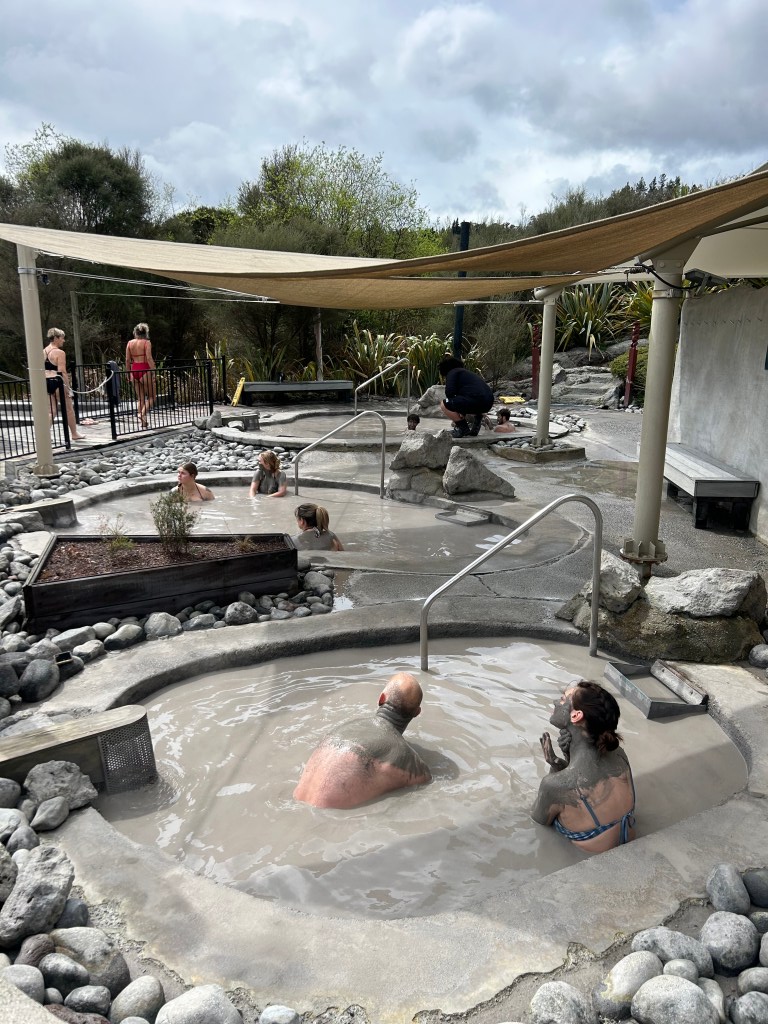
Hells' Gate Thermal Spa mud baths in Rorotua, New Zealand

They tell you to remove all jewellery for 48 hours following your dip in the water, as the sulphur will leak out of your pores for the next couple of days and possibly ruin it. They also advise you not to wear any nice or new swimming outfits for the same reason, and although they didn’t get ruined, the smell definitely stayed in them for quite a few washes, as well as all the clothes in the same wash. To be safe, wear old swimming clothes (in case they get discoloured), don’t wear any ‘nice’ outfits for the next couple of days, and wash all of your ‘sulphur’ smelling clothes in a separate wash to everything else.

Another favourite was a Maori Experience – We booked the Mitai Maori Village: Cultural Experience and Dinner Buffet through Get Your Guide and it was amazing. We got picked up from the Cosy Cottage Thermal Holiday Park that we were staying at, and were taken to the Maori Cultural Village. We got a traditional Maori meal cooked in a Hāngī, listen to live Maori singing, and even watched a haka performance. There’s a lot of listening and sitting still so if you have a child who’s not good with that, you might not feel comfortable here, but we took our toddler with no problems.
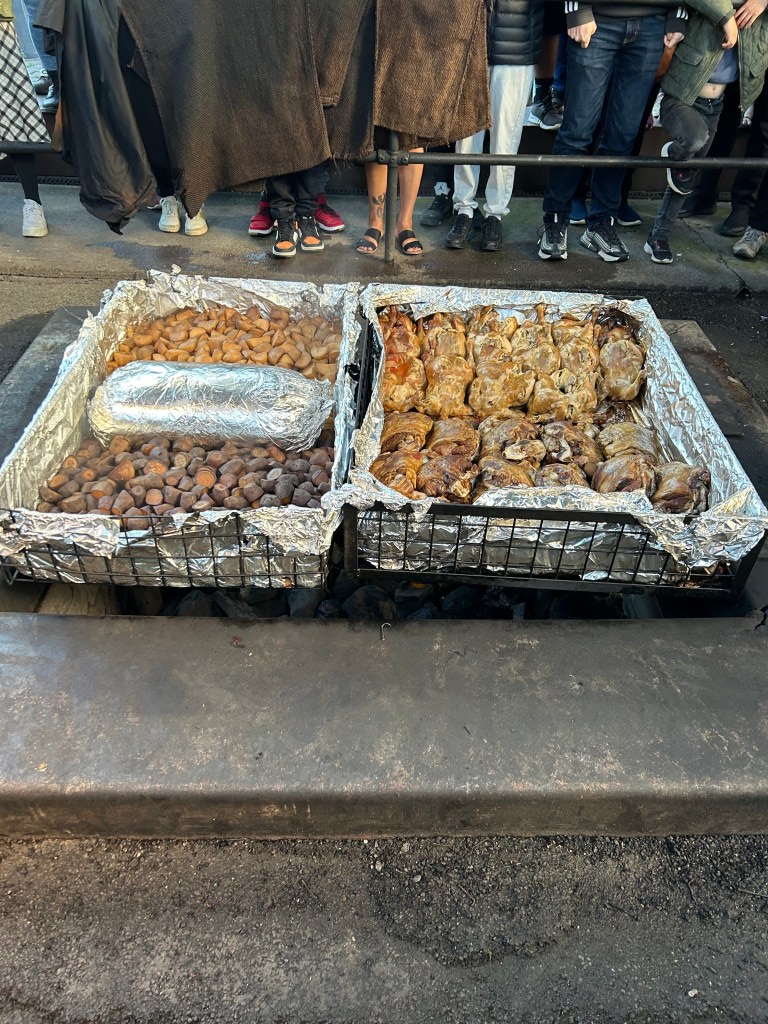
Food cooked in the Hāngī at the Maori Experience in Rotorua, New Zealand

 Some other child-friendly activities you can do here are the Astrodome Farm Tour, skyline & luge, a Polynesian spa and the Kiwi Hatchery; our 2-year old had a great time doing all of them! We also went Zorbing (Rotorua is the birth-place for zorbing); obviously they don’t let young children in, but they do have hot tubs at the bottom of the hill for people to sit and wait in, which she sat in with us whilst we took turns rolling down the hill.

If you do plan to visit Rotorua, one of the best pieces of advice that we can give is to visit the Secret Spot Hot Tubs. You can book out private hot-tubs in the forest, but unfortunately they don’t let young children in so we didn’t get to do that. Some friends of ours told us that they have a little cafe/bar area as well with smaller foot-tubs, which was perfect for us. We all sat around with our feet in with a glass of wine (Adelaide had a cup of milk and some sweets that they had kindly given her!).
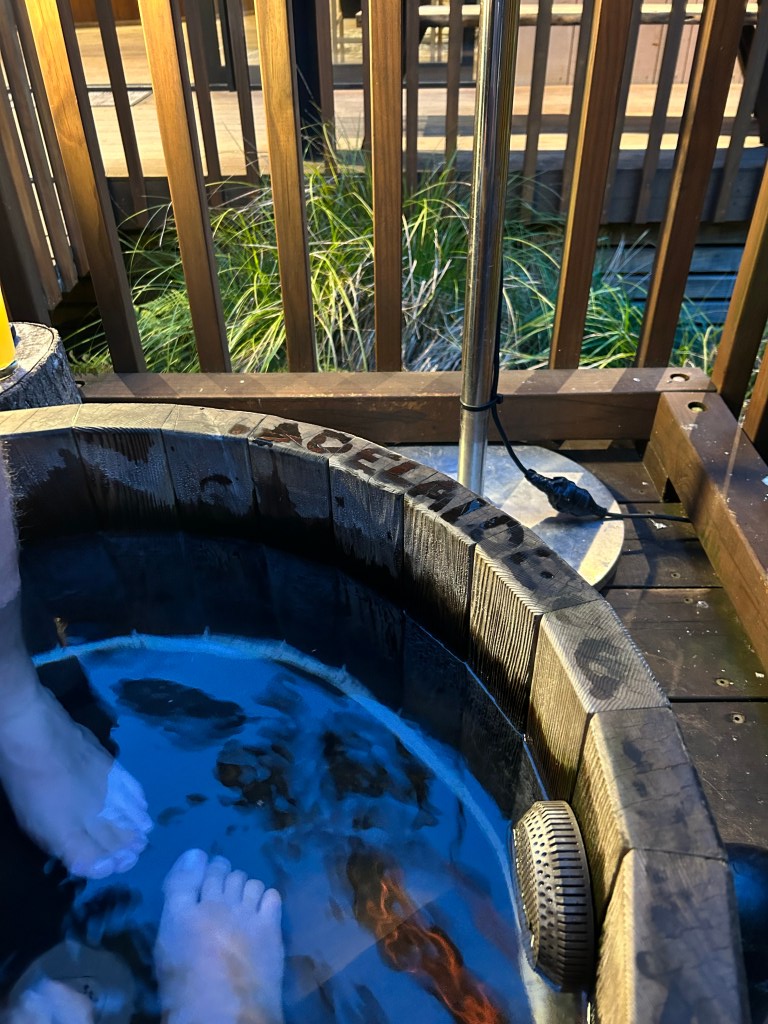
Outdoor foot spa at Secret Spot Hot Tubs, Rotorua New Zealand

We were lucky that it wasn’t very busy when we went, as you can’t book out the foot spas, but definitely pop by if you have the time to have a drink amongst the trees and soak your feet in the warm geo-thermal water.

Day 18

HOBBITON & WAITOMO
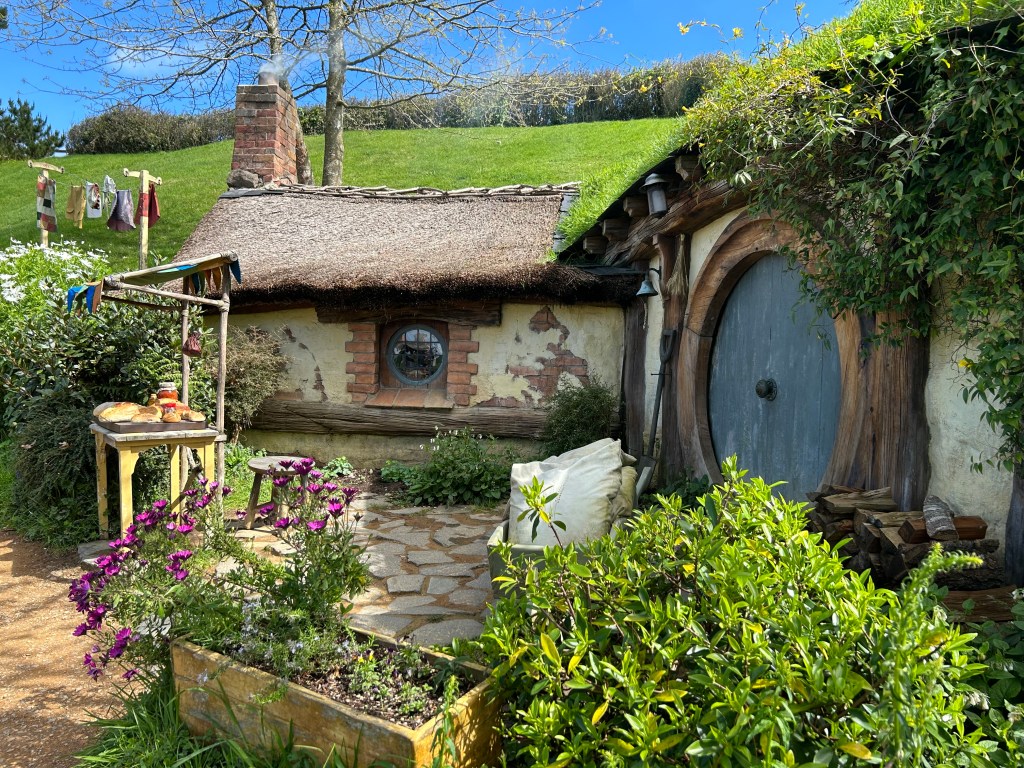
Hobbiton, New Zealand

After leaving Rotorua early in the morning, we drove up to Alexander Farm which took around an hour. Even if you’ve not watched Lord of the Rings, you can’t go to NZ without visiting Hobbiton. It reminds me of Teletubbyland with endless rolling hills with immaculate green grass! There’s a movie set tour which takes 2.5 hours where they show you around the outside set of Hobbiton, and there’s also a fully constructed Green Dragon Inn. You can sit and have a drink, or opt for a ‘second breakfast’ or ‘evening banquette tour’ to have a meal as well.

Prices range from $180-$230NZD for an adult. You have to go around as part of a guided group; you park in a car park and get on a coach into the Alexander Farm. There are plenty of parking spaces here for larger motorhomes but I’d definitely pre-book your tour tickets as they can be hard to get hold of in the busy-season. 
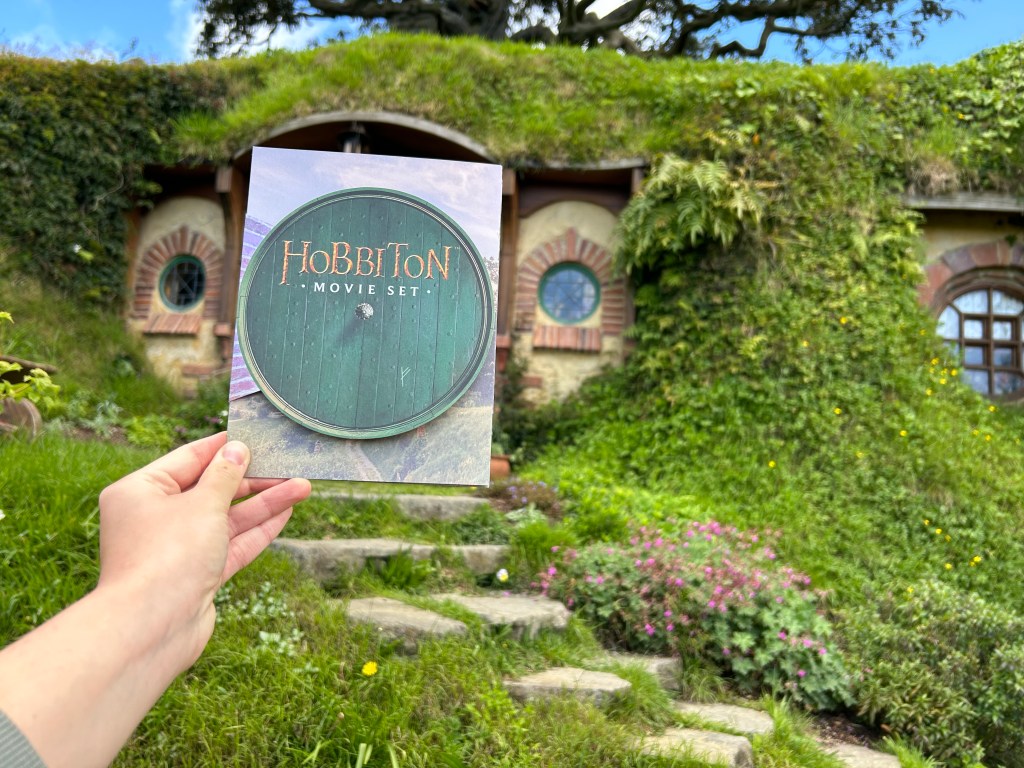
Hobbiton Move Set Tour, New Zealand

They have recently built a large-scale Bagshot Row, where you can actually explore inside Bilbo Baggins’ hobbit house!

Once we had finished, we drove the hour-and-a-half’s journey to Waitomo to see some worms!!! Now, I know what you’re thinking… why would you go all the way to New Zealand to look at some worms? But these aren’t just any worms, they’re glow worms, and they really are worth it!

We stayed at the Woodlyn Park campsite which was nice and remote, just a short drive from the centre of town and only cost us $10NZD for the night (although there were no amenities or power!). In the centre of town, there’s a really nice little ‘pub’ called Tomo Bar and Eatery which is right across the road from a children’s playground if you’re travelling with little ones like us.

Waitomo is most famous for its’ glowworm caves which are pretty cool to see even though you can’t take photos (booo), but there’s also a lesser-known spot for seeing them too which in my opinion is much better – AND it’s free!

In the day whilst it’s still light, take a walk through the Ruakuri bush walk and familiarise yourself with the paths and caves – it takes around 30-60 minutes depending on your pace and how often you stop to admire the views. As soon as it gets dark, head around the same trail and see the most incredible forest of fairy lights, especially either side of the main bridge and right at the start of the trail near the carpark.

We did both with our 2 year old (yes, we did take her around at 9pm in the pitch-black and she loved it) but depending on your child, this might not always be possible. It’s definitely not pushchair friendly, so be prepared for a lot of carrying! 

If glow-worms really aren’t your thing, there’s also black water rafting and ziplines in Waitomo, but I probably wouldn’t bother stopping here if you aren’t interested in seeing nature’s twilight dancers. 

Day 19 & 20

HAHEI HOT WATER BEACH & WHITIANGA

The drive around from Waitomo to Hot Water Beach takes between 3 and 4.5 hours depending which route you take. Once you get up to a place called Kopu, you can cut across to the 25A road, or you can take the longer, more scenic route up along the coast. The 25A hadn’t been re-build following the 2023 floods when we visited so we had no choice but to go around the longer route, which was…. interesting to say the least. The actual coastal drive was stunning and there were some great places to stop for a cup of tea or a picnic, but once you got up to the Coromandel-Preece Point Airfield and took a right onto the 309 road, that’s when things took a bit of a turn. (I hope someone appreciates the pun there).

This road is hardly a ‘road’, more of a dirt track with a LOT of bumps and really REALLY sharp turns. In all honesty it’s not ideal for larger campervans, we made that mistake! Having said that, despite the perilous conditions, there is one really cool part which is the pigs. Not long after you turn onto the road, you come across loads of pigs and piglets running around across the roads and fields; you can get out and see them but do it with caution! 

We spent the first night at Hot Water Beach Top 10 Holiday Park which was really big with great amenities. It’s only a 10 minute walk away from the beach and we got there at the perfect time to go and dig our hot tub! You only have a 2 hour window either side of low tide so make sure to look at the times first – you can find all the info here on the holiday park’s website. They had shovels to rent, but in reality we didn’t need them because there were already loads of huge holes dug by other people so unless you get there at a super quiet time (in which case you’re lucky!!), you probably won’t need them. Don’t think about using your hands though; in some areas the water and sand are so hot it burns you so just be cautious with young children.
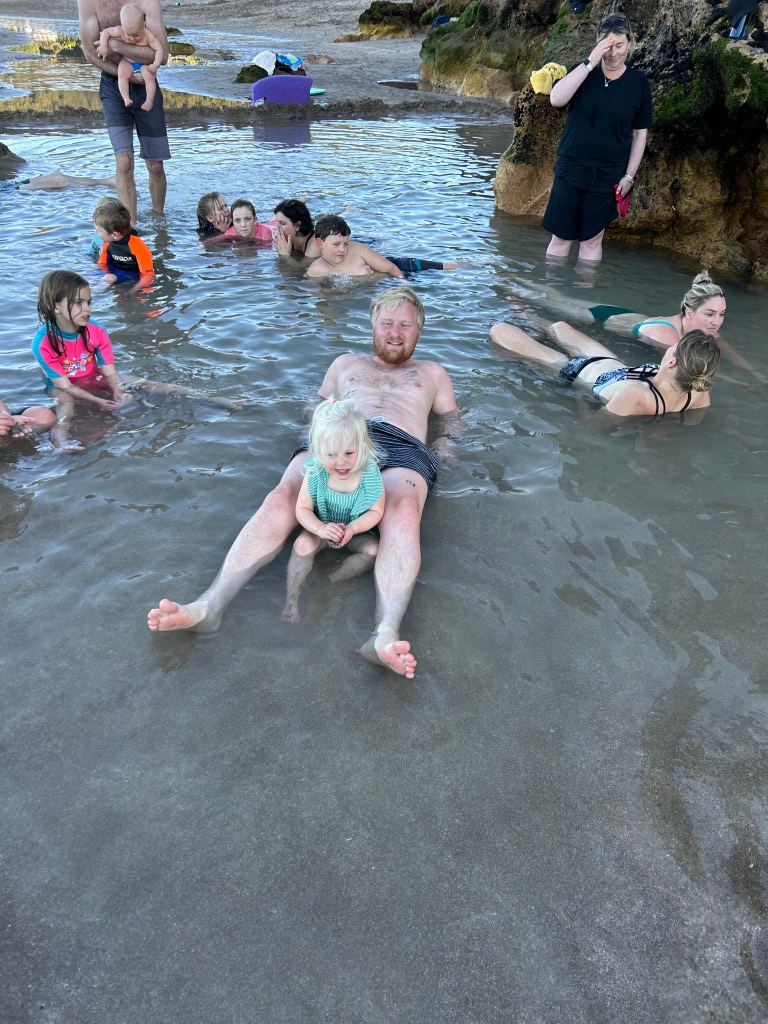
Hot Water Beach, Hahei New Zealand

We woke up the next morning and drove the 20 minute trip north to Whitianga. Whitianga was a beautiful seaside town with nice bars and views of the sea. From here, you can do a boat trip around to Cathedral Cove, look at the beautiful wildlife in the marine reserve and even get out and walk along the golden sand beaches. There are a few different trips offering different things, but the one we opted for was a glass-bottomed boat as we didn’t plan to get off at the cove, and it was much nicer for our 2-year old to see the fish under the boat!
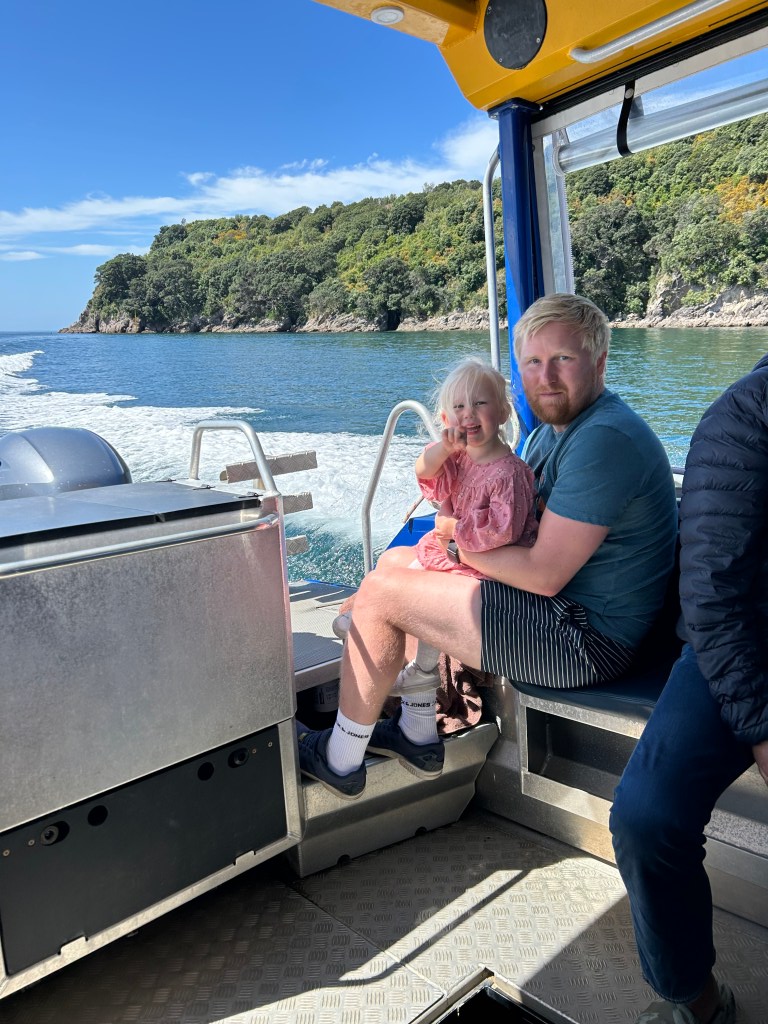
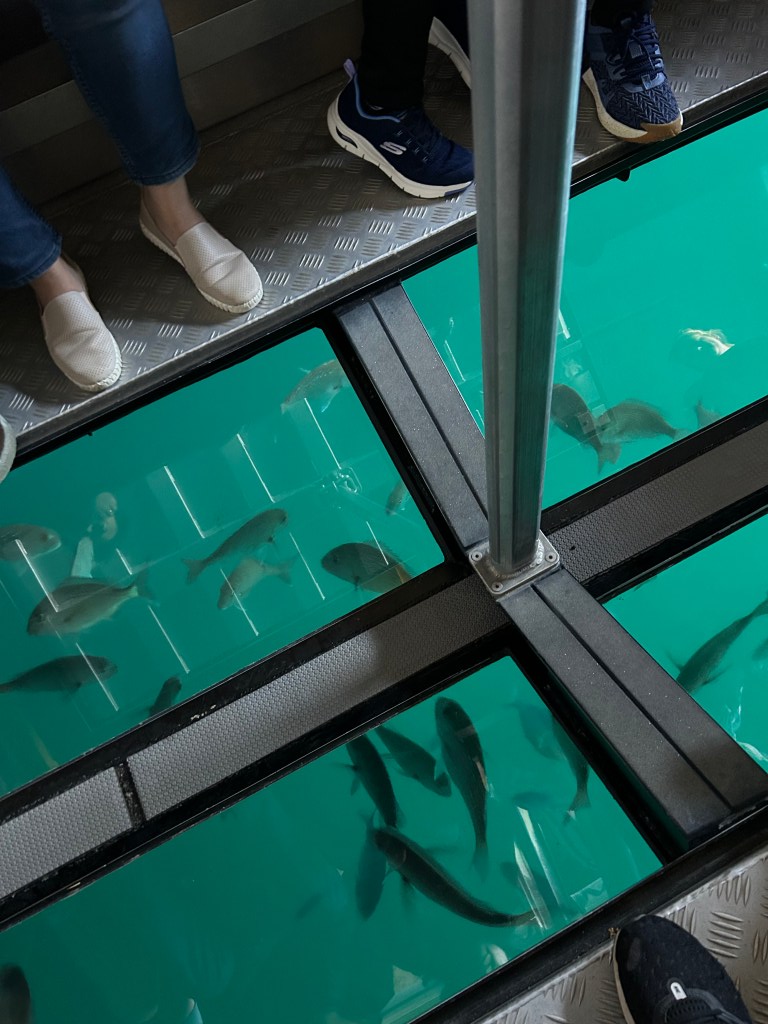
We did get the opportunity to get out and snorkel but Scott was the only person on the boat who chose to, and quickly changed his mind (it was just coming into Spring when we went and the water was still bitterly cold, even on the most beautiful of days!). We got given handfuls of fish-food to chuck out in the water and we could watch swarms of wonderful fish come up to the surface. We stayed at Mercury Bay Holiday Park which had everything we needed, including a playground for our toddler! 

We actually went straight from Hot Water Beach to Auckland and flew out the following day, so sadly missed out on Northland, but if you have a few extra days I would 100% recommend carrying on north as it’s something I really regret not doing!

Day 21, 22 & 23

NORTHLAND

One thing that we didn’t do, that we wish we had made the time for, was Northland; the area right at the top of the North island which has luscious beaches, wonderful marine life, cultural colonial era towns and mystical forests.

Whangarei is the northern-most city of NZ and features the stunning Whangarei falls, and Whangarei Quarry Gardens. It’s about 3-hours north of Whitianga and starts the 3-day loop of Northland. From here, head an hour and a half north to Russell where you can stay the night. Russell was the first European settlement and seaport in New Zealand and is rich with history, cafe’s eateries and galleries. It’s situated in The Bay of Islands which is one of the most popular places in New Zealand!

The following day head around the bay to Paihia, and visit the historic Waitangi Treaty Grounds to immerse yourself in more Maori culture and hangi cooked food. Paihia is a great spot for boat trips out into the Bay of Islands to explore the marine life and caves.

When you’re finished, drive the 3-hour trip up to Cape Reinga, the northern-most tip of the country. There’s a lighthouse with stunning views over the blue waters, and some giant sand-dunes where you can have a go at sand boarding.

The following day, head down to Waipapakauri and take a stroll down the never-ending paradise of golden sand that is the 90-mile-beach (which is actually only 55 miles long….). Once you’ve cleared your head and soaked up the fresh air, keep going south to Waipoua Kauri Forest to see the largest kauri tree in New Zealand (it has a diameter of more than 4m!). There are very few accommodation choices on the west side of Northland so you might have to pay a bit more, or drive a bit further to find somewhere cheap/free.

Day 24

AUCKLAND

On your final day, drive into Auckland and explore the city (depending on the time of your flight). If your flight is the following day, I’d advise to stay in a hotel near the airport that night so you can check your luggage in and have a proper shower with some luxury comforts before your flight home. After 3 weeks in the peace of the countryside, it might be nice to spend the evening going for a nice meal and a couple of drinks (again, depending on your flight time) to celebrate the last night and try and beat some of the final-night-blues we all inevitably get!
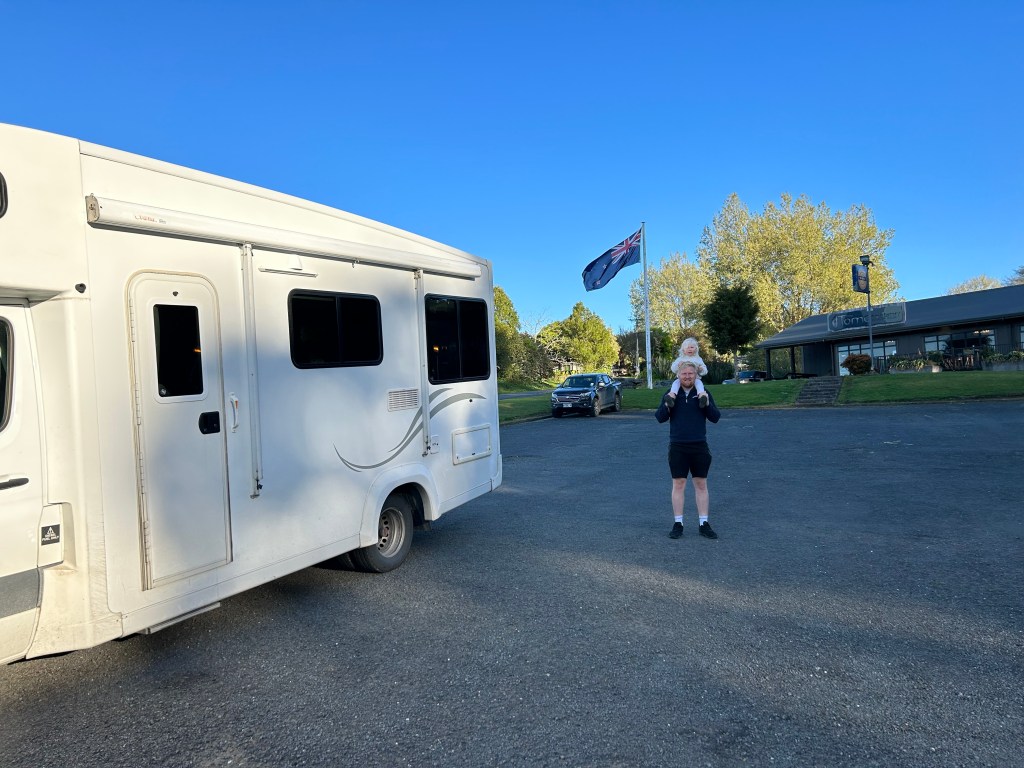
 

24 Days in New Zealand (Toddler-Friendly): North and South Island!

So… that’s it! That’s 24 days travelling through one of the most beautiful places in the world!

Of course, if you have longer then there are lots of other places you can add in en-route, but not everyone has the luxury of ‘unlimited time’ so we’ve been as selective as possible and only recommended what worked for us and what we think gives the best insight into the country and the kiwi culture!  
 

Easy Makeup for Holidays

If you’re anything like me (a busy mum), you want to look like you’ve made an effort without actually having to make the effort. Whether you’re holidaying at an all inclusive or you’re backpacking around, you don’t want to be spending hours in the morning getting ready, or spending a fortune on permanent treatments before you go on holiday.

After nearly 6 years of travels, I’ve finally nailed the easy, low-maintenance makeup routine on holiday. Here are the 5 must-haves for your makeup bag. All hand-luggage friendly, and all for under £35!

Easy makeup for holidays - 5 must-haves for under £35!

This page contains affiliate links, and as as an Amazon Associate, I earn from qualifying purchases. If you do choose to purchase after clicking a link, I may receive a commission, but this is at no extra cost to you!

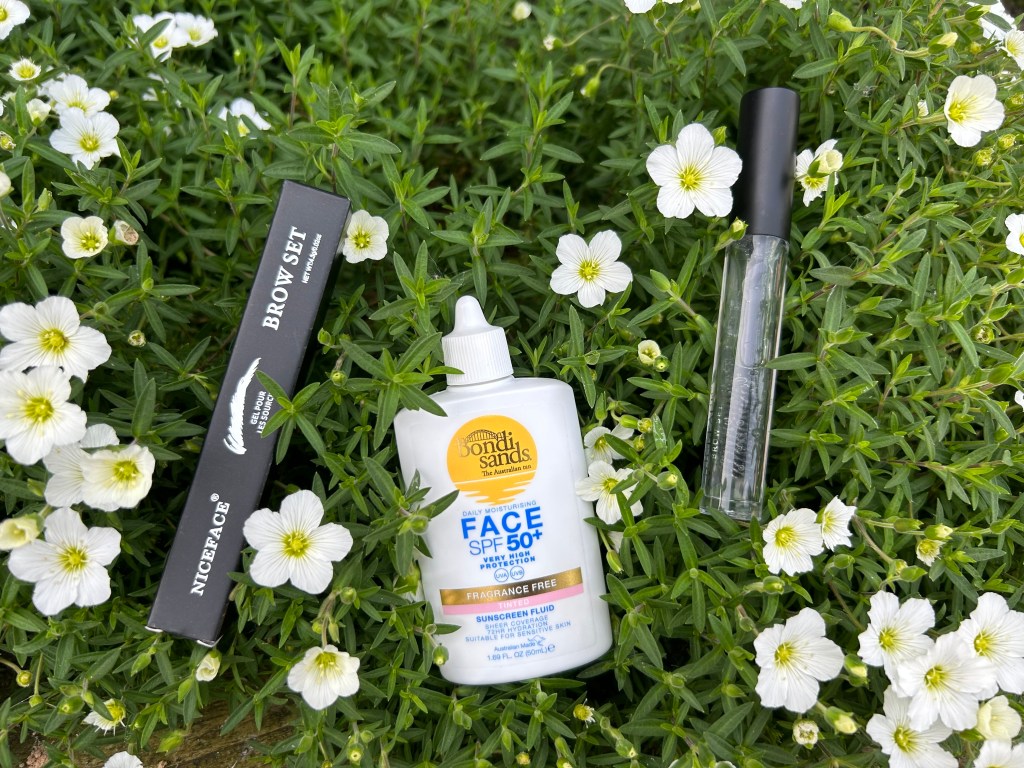
1. Tinted Face SPF

Everything I’ve read about easy makeup routines for holidays raves about using a BB cream as opposed to foundation, as it’s less heavy and is a lot more wearable in hotter weather. But, why not go one step further and use a tinted SPF? I’d never really seen them around before (or maybe I just haven’t paid attention), but since buying the Bondi Sands Tinted Face SPF for £8 I wouldn’t use anything else. Not only is it a factor 50, but it’s also got a perfect glow to it, giving you the sun-kissed look without foundations and bronzers. It’s not greasy like regular suncreams are, making it perfect for hot sunny beach holidays, cold winter ski holidays and European city breaks (pretty much anything where you might be spending time outside!).

What’s even better is it’s only 50ml and lasts for ages, so is perfect for fitting into your hand luggage!

2. Eyebrow Tint

You may or may not be lucky enough to have perfect brows, but if you’re like me, you need to do a bit of work to their shape and colour. Of course, eyebrow pencils are great, but they require doing every morning and need topping up if they smudge or get wet. I try and tint my eyebrows before I go using the Eylure Dybrow kit, which lasts me about 1-2 weeks. If you are going for a much longer trip, the kit is really small and is perfect for hand luggage if you want to top the dye up whilst you’re away.

3. Eyebrow Gel

Even after I’ve tinted, I do still need to help the shape a bit, so these Mimore Brow Fix Gels from Amazon are so cheap (only £2.50 each) and work so well for me. Of course you can get some super expensive ones which are probably much better, but I find these work really well for what they are and keep my eyebrows in place all day, so don’t really feel the need to spend any more. It takes seconds to brush through and shape and are an essential part of the travel kit, in your suitcase or your handbag.

4. Waterproof Mascara

Pretty much every brand of mascara offers a waterproof alternative, so if you have a set favourite then stick to it. I use Maybelline Lash Sensational Waterproof Mascara as it’s less than £10 and perfect for everyday wearing. It’s not just me who’s raving about the high street favourite – Harman, the fashion and beauty guru behind the blog YourGirlKnows.com also recommends Maybelline in her 8 Best Drugstore Waterproof Mascaras.

5. Tinted Lip Balm

The great thing about a tinted lip balm is it’s versatility. It keeps your lips hydrated and prevents chapping in the colder weather, and if you get one with SPF then you can protect your skin in the sunshine, all the while giving them a nice subtle colour. For a cheaper option, Burt’s Bees Tinted Lip Balms are made from completely natural ingredients and come in lots of different shades.

24 Travel Goals for Families in 2024

Travel is one of the best ways to bring your family closer and spend quality time together. Not only do you get to explore new places and create memories together, but you also get to watch your children grow into the adventurous young people you want them to be.

23 Travel goals for families

If you haven’t thought about setting travel goals for your family then you should re-consider. Setting goals together as a family is a great way to make sure set out your expectations of each other and the trip, and could avoid a whole heap of arguments down the line. Travel goals are a bit like a travel bucket list, but less specific and has more scope for movement to adapt to whatever situation or destination you end up in. Take a look at our list of 24 Travel Goals for Families in 2024 below for you to get started.

  1. Visit at least one country in each continent together
  2. Do a long weekend staycation in your own country
  3. Each take it in turns to plan a different trip
  4. Start a new hobby abroad that you can continue at home
  5. Go glamping
  6. Spend a day ‘off the grid’ together
  7. Make friends with another family whilst away (and stay in contact afterwards)
  8. Do a random act of kindness on each holiday
  9. Tick off as many modes of transport as possible (plane, bus, car, boat, tuk-tuk, segway etc…)
  10. Do a family volunteering holiday
  11. Start a family travel photo album/scrapbook
  12. Learn to cook an authentic local dish from another culture
  13. Do a multi-city trip
  14. Write your bucket lists
  15. Stay in an all-inclusive resort
  16. Learn another language together (or each learn a different language and broaden your combined knowledge)
  17. Do a road-trip in a campervan/RV
  18. Stay in a hostel
  19. Walk under a waterfall
  20. Spend Christmas in a different country
  21. Do a home-stay and immerse yourself in a new culture
  22. Go back-packing
  23. Watch the sunrise together in a wonderful place
  24. Do a safari

Of course there are SO many other family travel goals that you could have, we’ve just pulled out a few of our favourites to get you started. If your children are old enough, creating a goals list is a great activity to involve them in before you go away.

Let us know any of your family travel goals

Rome: How to Spend 4 Days in the Italian Capital

Whilst on holiday in Poland, we decided to book our next adventure to Lithuania. Unfortunately, due to COVID travel restrictions, we had to change our plans last minute and we ended up booking Rome! Our birthdays are both in September so we like to have a long weekend break around the end of the month to celebrate – this time Scott was the one who’s birthday fell into it nicely. We flew out on a Thursday evening to get as much time there whilst using up as few days off work as possible, meaning we were able to have four days in the Italian capital.

Whilst on the plane I met a really lovely girl called Monique, who we ended up going for a meal with one night in Rome. Her and her boyfriend Adrian feature in some of our activities so I thought I would add some context now!

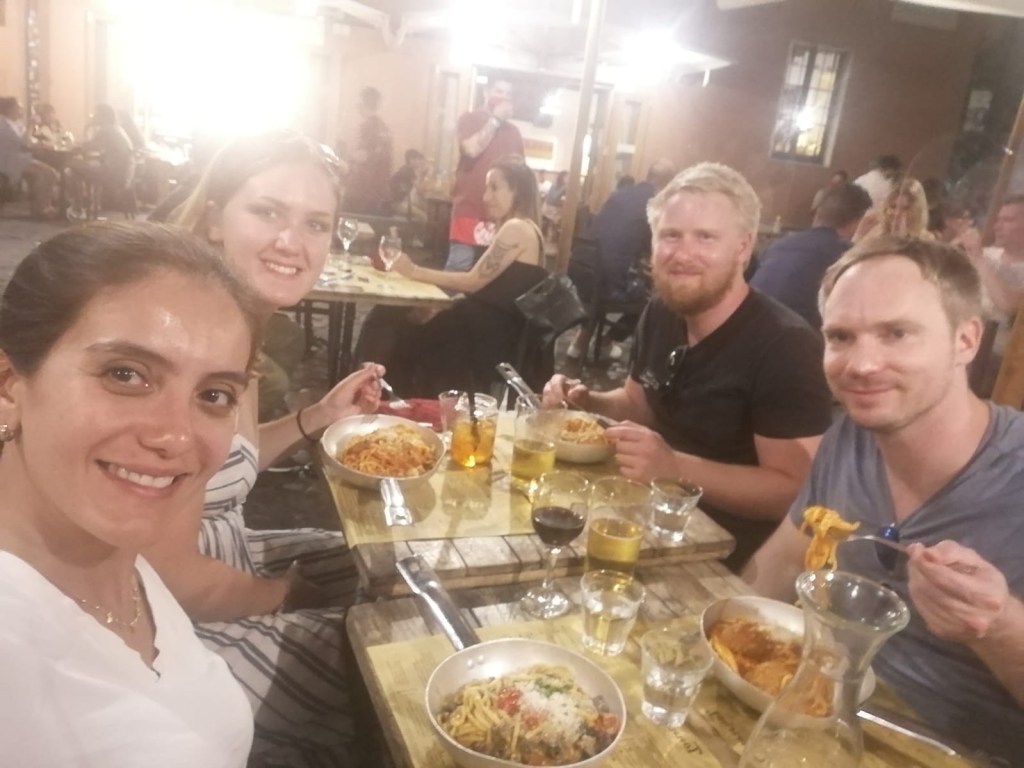
Out for a meal at Tonnarello with Adrian and Monique

Transport

When we landed in Rome (Ciampino), it was nearly midnight and we only just managed to catch the last bus into the city. It cost us €7 each and took around 30 minutes to reach the main terminal. There are a lot of buses in Rome which seem to be quite frequent, however we don’t have any experience with them other than from the airport. You can walk pretty much everywhere you want to go if you’re prepared to get some serious steps in. My first tip would be to make sure you bring some comfy walking shoes and blister plasters! Don’t worry if you’d rather get a taxi though, because there are lots around and they also have Uber. 

Our favourite mode of transport was introduced to us by Adrian and Monique, which was the electric scooters! All over the city there are electric bikes and scooters that you can use as you wish, and they are so easy to use (although I did accidentally fall off as we were on our way home from a bar at 1am on Scott’s birthday…). You just need to download the Uber Lime app which you use to lock and unlock them when you need it, and it all gets paid for from the card connected to the account – just like Uber! The only problem with them is that they can get addictive and you can easily ramp up quite a hefty bill if you’re not careful.

They cost €1 to unlock and then 25C per minute!

Despite it’s beauty, we did find Rome to be quite a dirty city. There was a lot of dog mess left on the side of the roads and there was an overall ‘grubby’ feeling.

Things to do

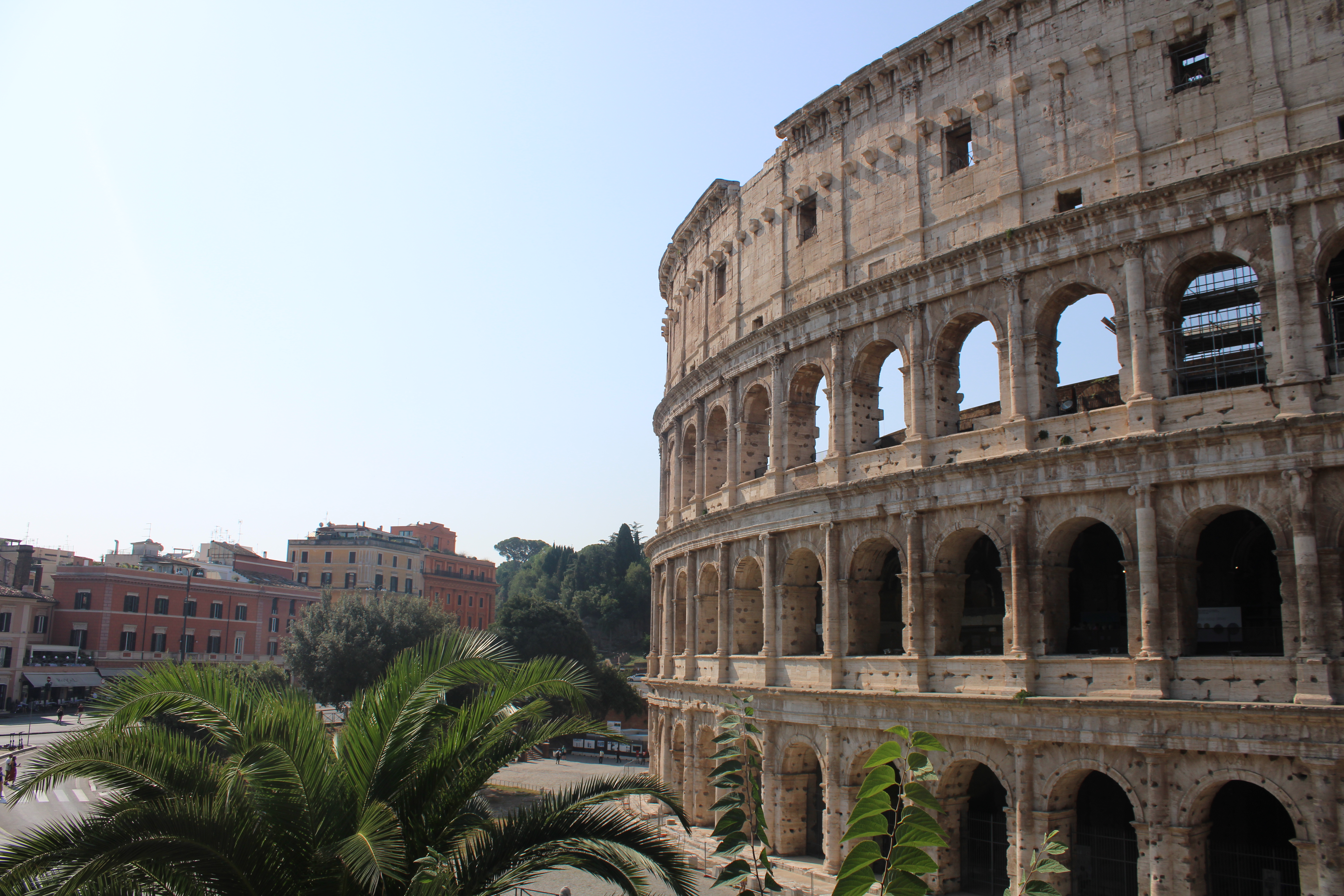
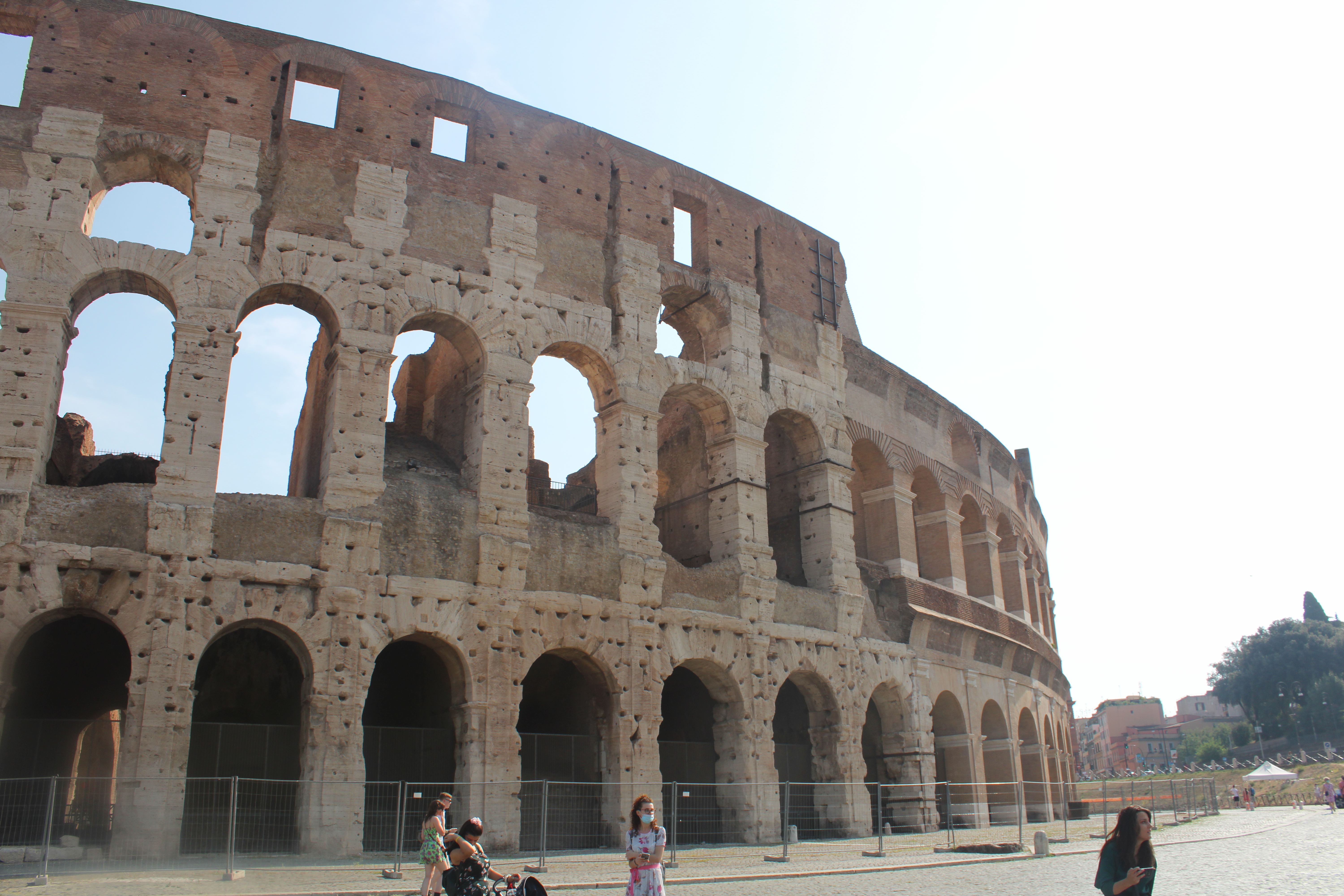
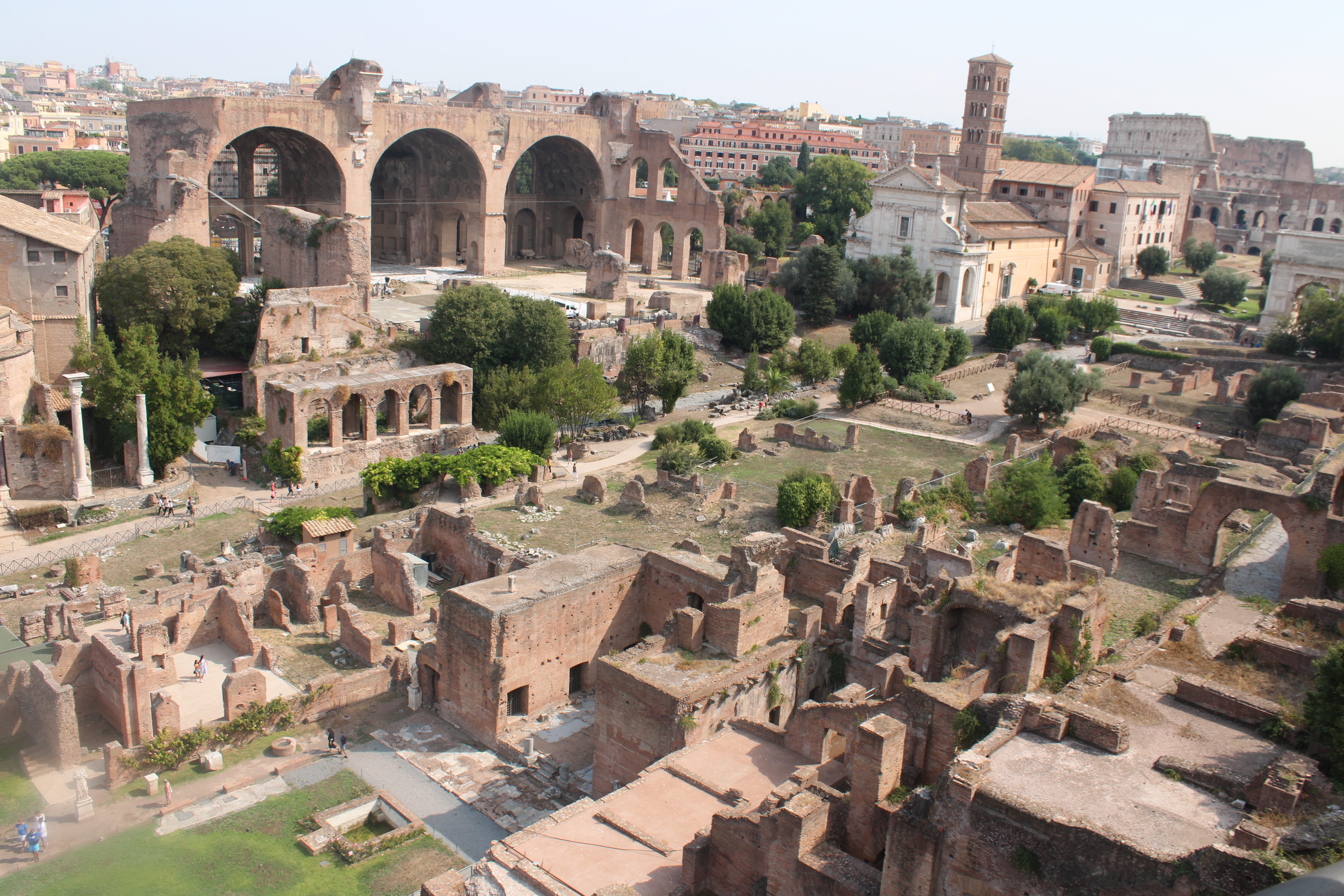
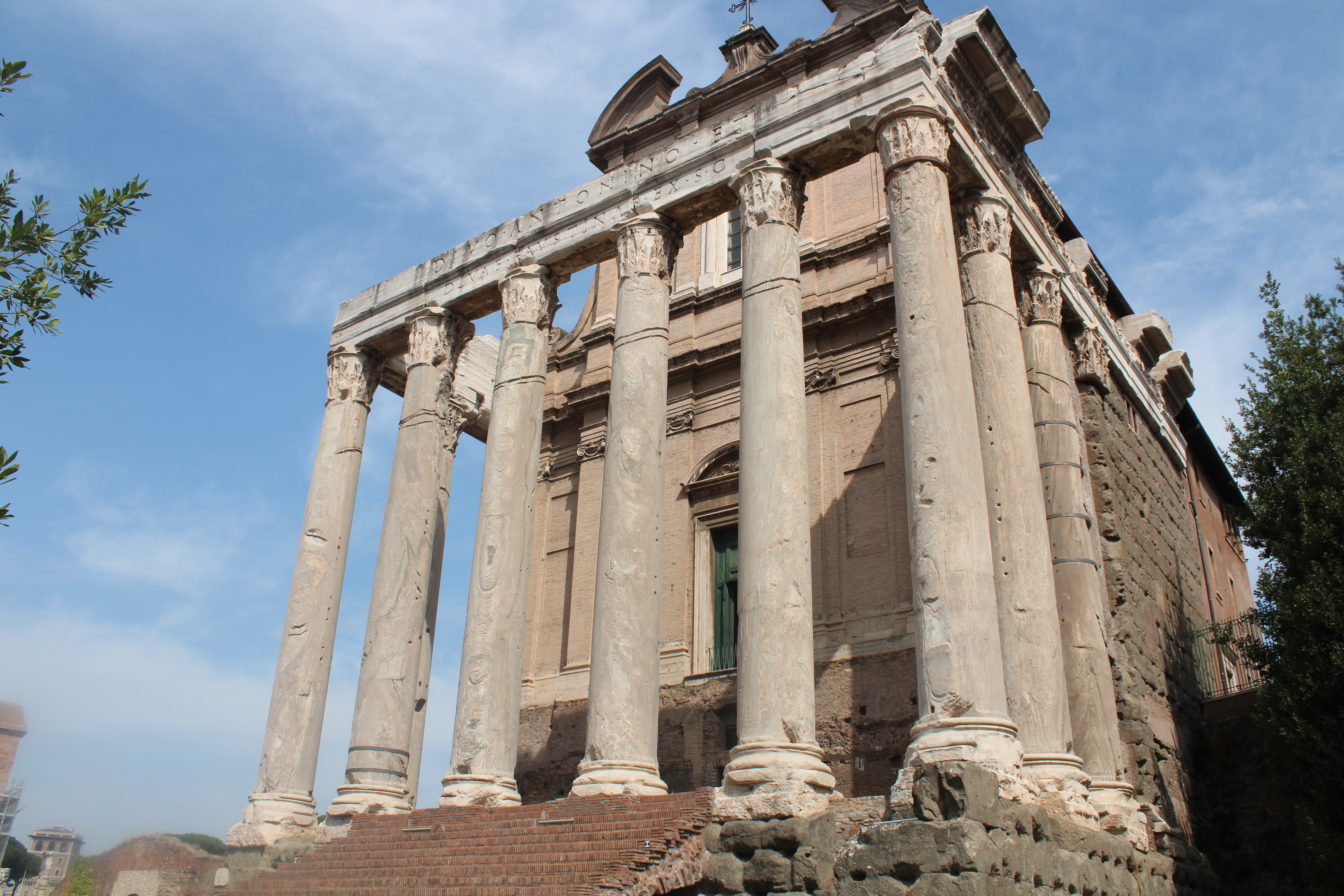
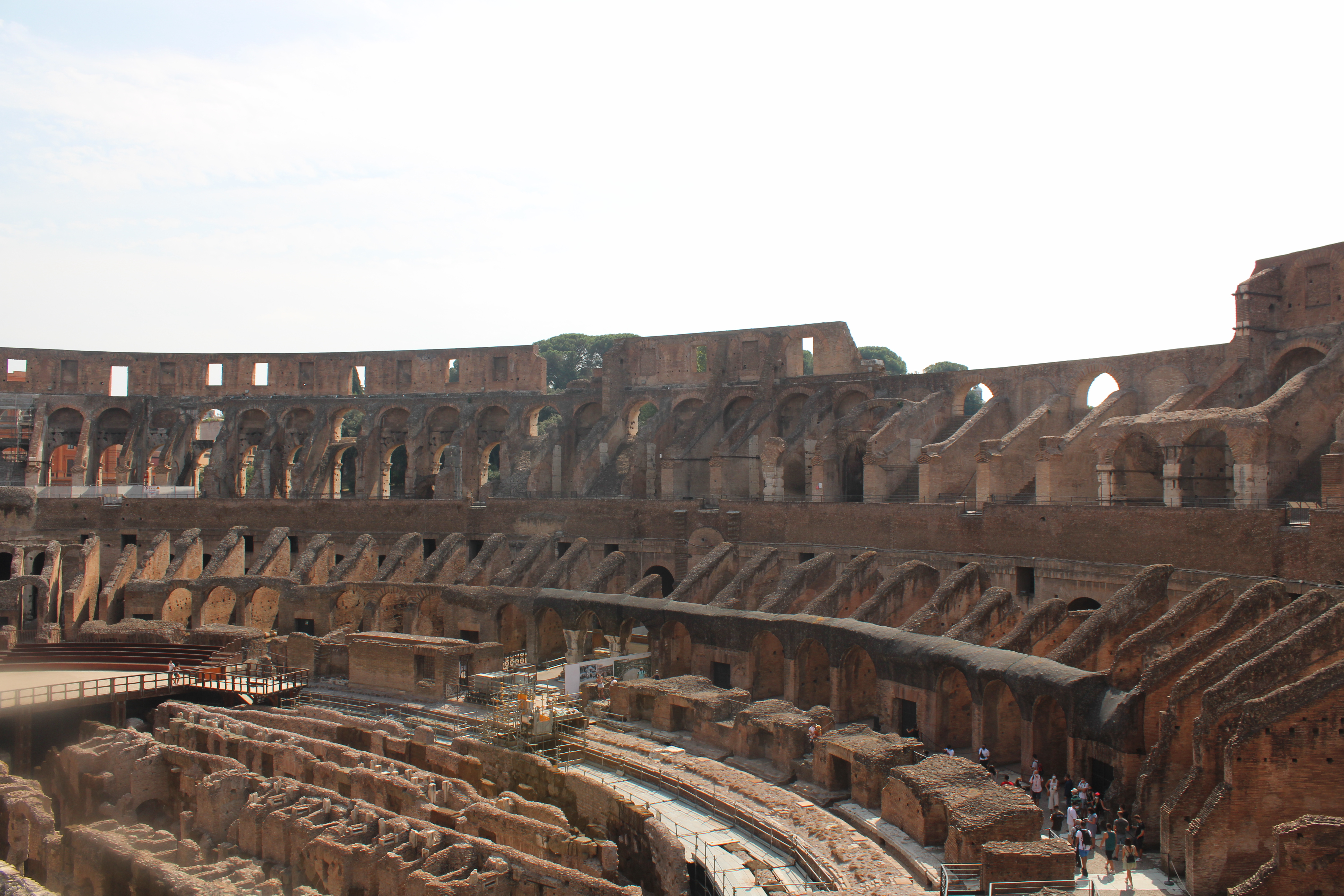
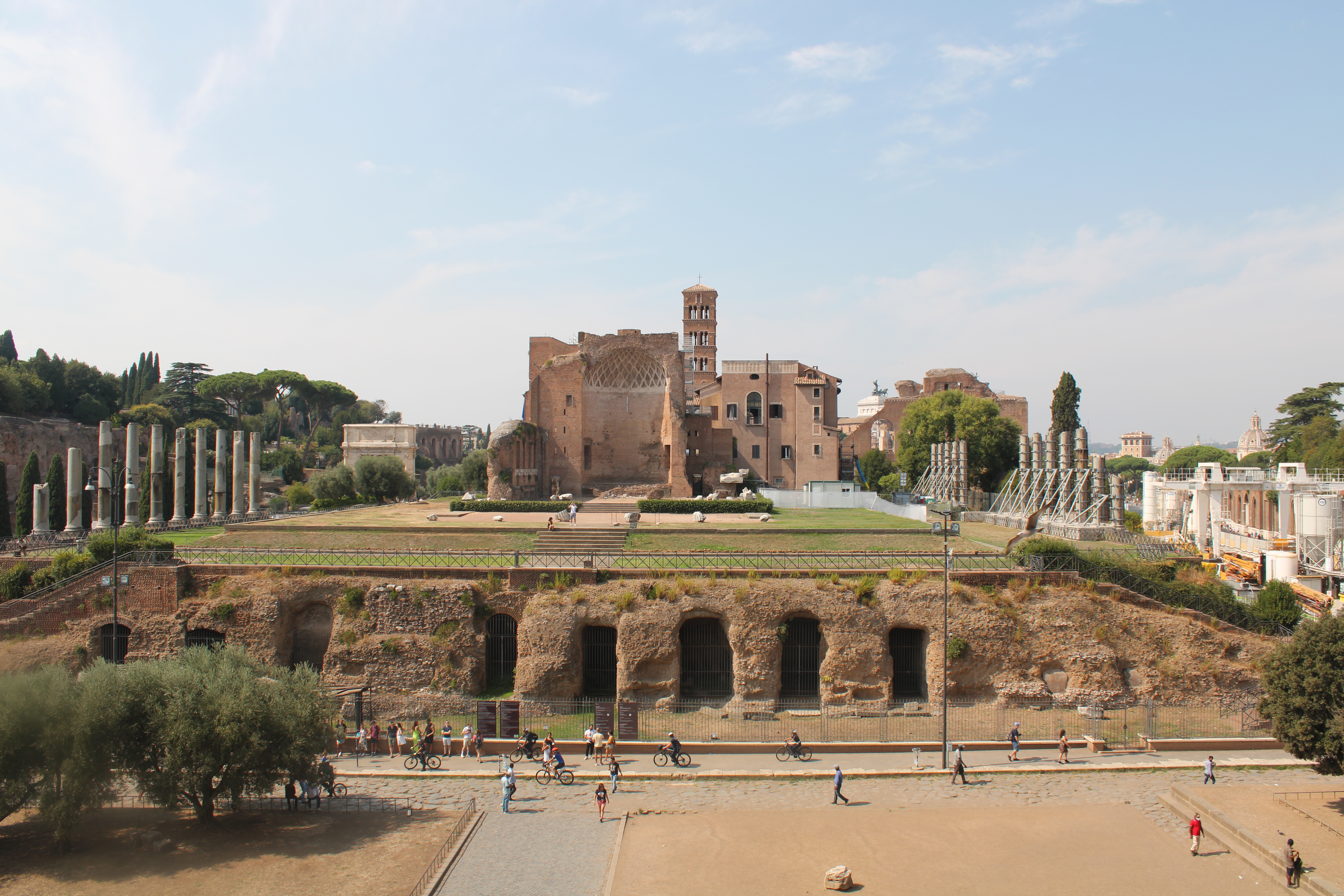
Colosseum and Roman Forum – We bought a ticket through Get Your Guide which included the Colosseum, Romun Foum and Palatine Hill in one tour. This was perfect because it meant they were ticked off all in one day, and we could then spend the afternoon relaxing! The Roman Forum was by far the longest stretch of the tour, lasting approximately 2 hours. As everything is outside and Rome is quite hot, we would really recommend taking a bottle of water with you – there are plenty of fountains to fill up with around the city. If you have four days in the Italian capital, you defintely need to set one aside to see this historical wonder.

We stupidly decided to skip breakfast before going on this tour and it was a huge mistake! I spent half of the morning feeling faint, dizzy and nauseous which resulted in Scott having to be my third limb for an hour. Even the guide stopped to ask me if I was okay because I looked so unwell – not what you need when in the middle of a pandemic…

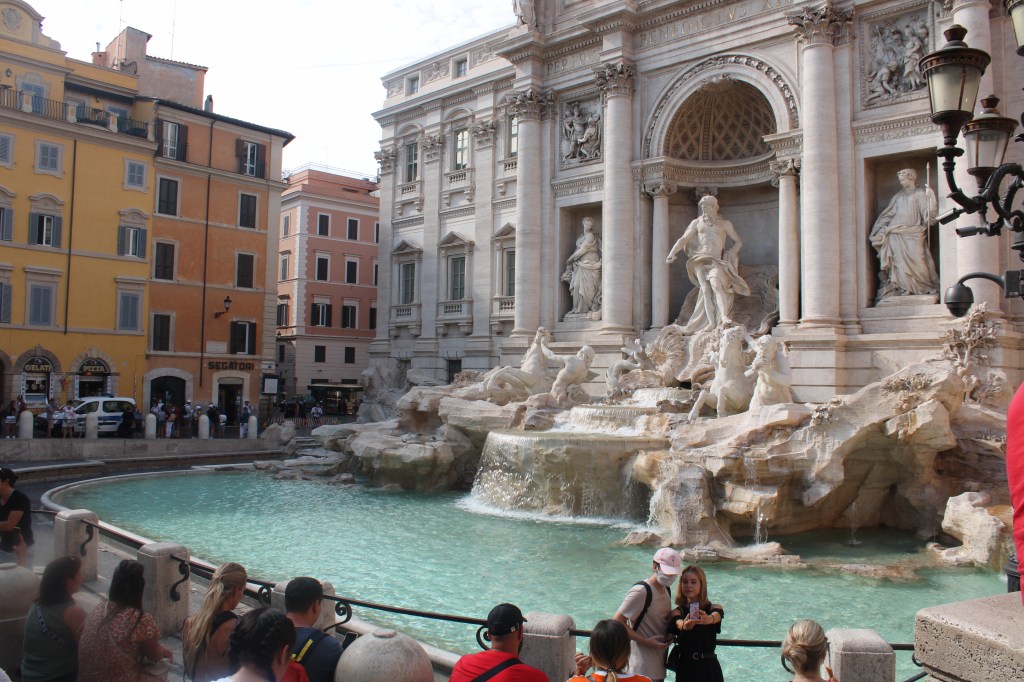
Trevi Fountain – If you’ve ever watched The Lizzie Mcguire movie (or pretty much anything else set in Rome), I’m sure you’ll recognise this famous landmark. Take a stroll down some quiet back-streets of the city until you come into a vibrant little area full of excited tourists around this amazing fountain! If i’m honest, it’s much smaller than I thought it was, and sadly because of COVID we weren’t allowed to get right up close to toss in a coin, but it was worth the walk nevertheless.

The Trevi Fountain - Four days in Rome

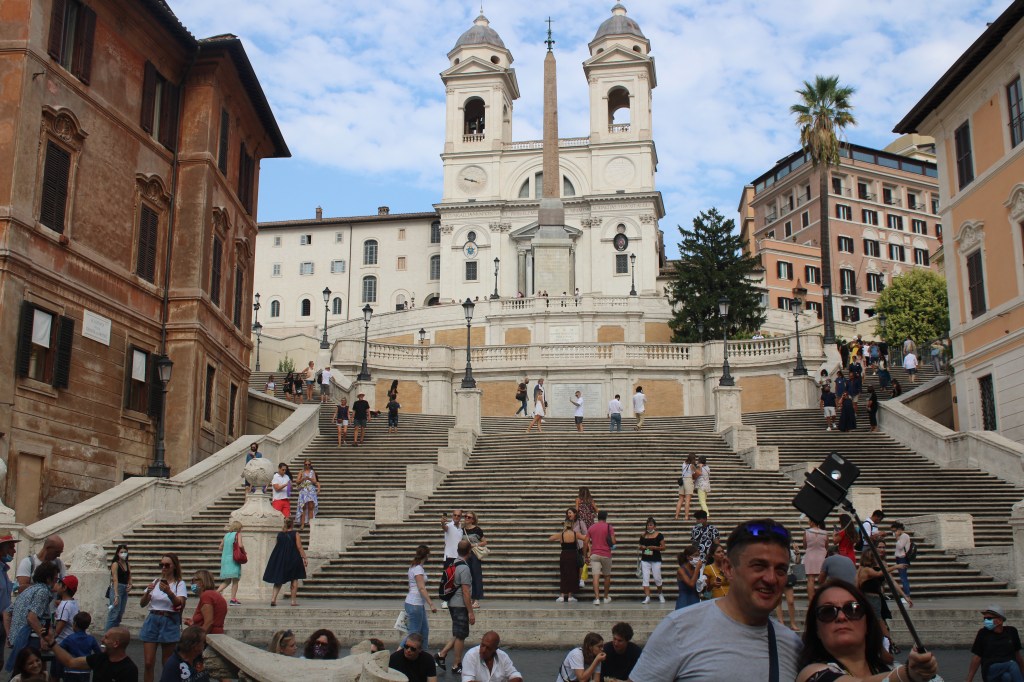
Spanish Steps – Another Italian landmark that you have to visit whilst here, but don’t plan your day around it! Before coming here, I’d heard such a hype around the Spanish Steps in Rome but it really was just a grand outdoor ‘staircase’ in the middle of a busy, overpriced tourist street. It’s worth swinging past to be able to tick if off your list but as I said, don’t expect much from it.

The Spanish Steps - A shot of the world in the Italian Capital

Pantheon – To be honest, we sort of forgot about this until our last full day however we are so glad we got to see the Pantheon. It’s sort of ‘something and nothing’ in that it’s in the middle of a little square and quite off the beaten track, however the history of it and the facts that you learn about the Romans is so fascinating. They really were incredibly clever people who’s thinking was so ahead of their time. I’m not one for appreciating architecture but it’s hard not to when in comes to the Pantheon. As it was a spur of the moment decision to visit, we hadn’t planned or booked a tour. We were approached outside the queue by a man offering a tour for only €10 each, which we would recommend. The company was called The Vatican Tour Company and the information that the guides can offer really makes the visit worth it!

Visit The Pope – Surprisingly, I’m not even joking. Although you might think the chances of seeing the big man himself are slim, you’d be surprised at just how often he makes an appearance. Every sunday at midday he comes to the window (second from the right on the rop row) of the Apostolic Palace in the Vatican, and talks to the crowds that gather below. We were fortunate enough to be there at this time and it was an amazing thing to experience. He gave a short speech and read out a blessing (according to Google… It was in Italian so obviously neither of us understood). If you are in Rome on a Sunday, I would 100% recommend heading to The Vatican for an hour to witness it yourself.

Yes, it’s hard to see but that little figure in the open window is Pope Francis

Hop-On-Hop-Off Bus Tour – As there is so much walking to do in Rome, we thought it would be a good idea to book a hop-on-hop-off bus for one of the first days in the city. This way, we were able to cover a huge area and pinpoint the parts that we wanted to come back and see at a later time. The great thing about the bus was that, as well as being a tour in itself (they provide you with headphones to plug in and listen to information about the city), it was also a great form of transport for the whole day! We decided to only do the 24 hour service which was €17.70 each, but they had the option of 48h and 72h as well so if you think you’ll be travelling about the city a lot, it may be worth looking into to save getting an Uber!

Where to eat

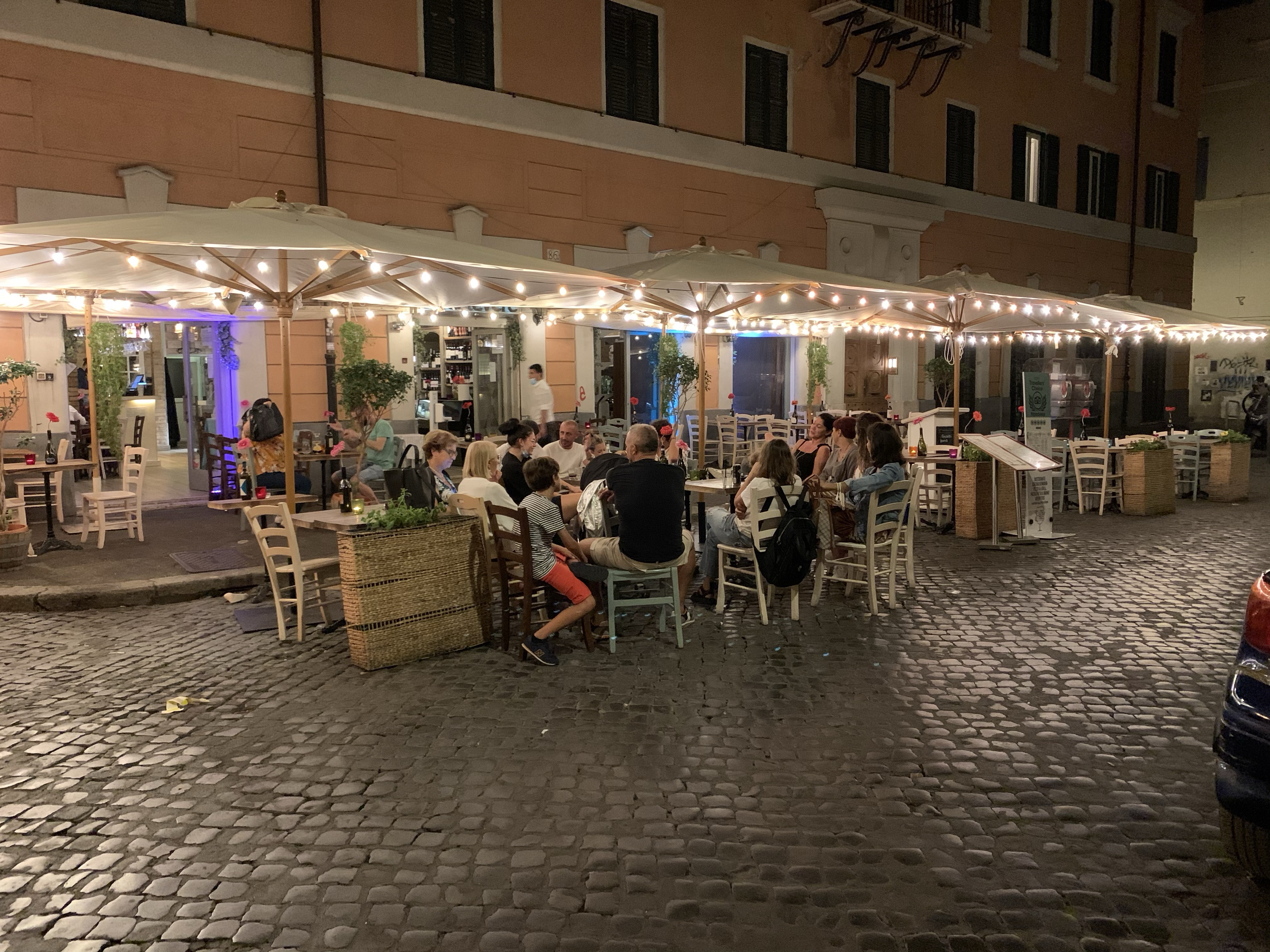
Looking for a relaxed, quiet street to sit out for a romantic evening meal? We’d recommend Nipotino del solitario. We came for a lovely meal one evening and had some really good authentic Italian food. The price was reasonable and the service was great! Another great place for an evening meal is Tonnarello. It’s a very popular place in Rome and is famous for their pasta dishes which come served in the pans that they are cooked in.

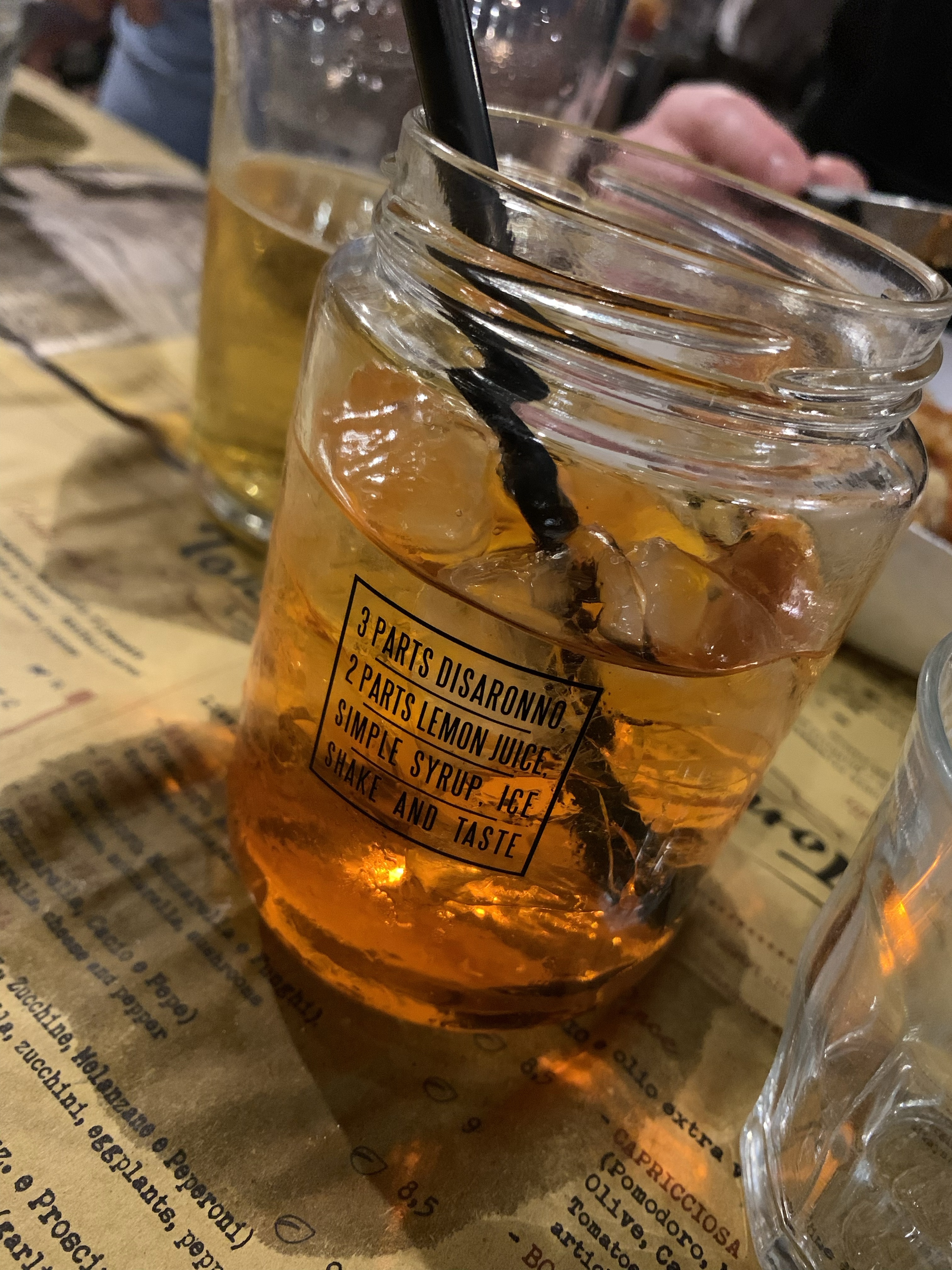
We went to Tonnarello with Monique and Adrian after some drinks at the most amazing rooftop bar called Cielo Terrace above Hotel de la Ville. The drinks here were MEGA expensive (it cost €12 for a bottle of beer) but the view and the company made it worthwhile!

If you’re near the colosseum and fancy a bite to eat, Al Gladiatore offers some nice food at a good price, with a backdrop of the ancient amphitheatre. I had one of the best carbonaras of my life here – if that statement doesn’t tempt you then I don’t know what will! Our best lunchtime recommendation is Hostaria de pastini. Scott had Oxtail in tomato sauce which was so tender that it leterally fell off the bone! He’d never eaten it before so it was another thing to tick off his bucket list this trip!

We were in Rome over Scott’s birthday and I asked him what he wanted to do for it. He said he just wanted to have a relaxed day of drinking, people watching and future holiday planning! We do love to make time for ourselves when we go away, even for a weekend break, and we found the perfect place for it. Lauro Bistro was a lovely little place just outside of the hustle and bustle of the tourist areas. We sat outside and drank lots of wine (as well as a £100 bottle of champagne which Scott had been waiting to tick off the bucket list), whilst listening to some great background music. It was the perfect way to spend our last evening in one of the most historical cities!

We have come to terms with the fact that this was probably our last holiday for a little while as sadly, COVID is back on the rise again. Hopefully we will be able to safely make it away over Christmas but if we don’t, it was nice to squeeze in some culture and adventure to see us through to the new year.

Shot glass number 17 and 18 are done and dusted.

How to get more holiday at work

Welcome to our ultimate guide on how to get more holiday at work and maximise those precious days off! We get it – we all want more time to explore, unwind, and recharge without sacrificing our work commitments. In this blog, we spill the beans on clever time management techniques and the art of striking the perfect work-life balance. From mastering the art of requesting time off to planning strategic annual leave days, we’ve got you covered. Say goodbye to endless hours of daydreaming about your next adventure and say hello to a well-deserved break without the stress!

Both Scott and I work full time, and one of the things we get asked constantly is “how are you always on holiday?”. Admittedly, it does probably seem like that seeing as we manage to get away at least 4 or 5 times a year, but really, we are just very smart about using our annual leave. We both only use around 23 days holiday a year, but we time our leave to make the most of every single day, and here’s how…

Book as much of your leave in advance as possible.

If you get ahead of the game, not only are you getting first-dibs on the days you want, but you’ll also make sure you’re actually booking your holiday and spreading it out, rather than getting towards the end of the year and panic-booking your leftover days. Also, you’re giving your employer plenty of time to find arrangements for your cover, so there shouldn’t be many reasons why they would decline the request.

Time it around bank holidays and weekends.

This one is arguably the most important if you want to get more holiday at work; play your cards right and you can have a 10-day getaway using only 4 days of your annual leave around Easter every year. Also, adding just one day onto the beginning or end of all bank holiday weekends could result in quiet a few 4-day city breaks spread out over the year, without eating into your leave allowance too much!.

Bear in mind that these can sometimes be the most popular days to book off which is why it’s so important to get in early with your holiday requests. If you want to get ahead of your colleagues, I’ve put together a cheat-sheet for how to get more holiday at work next year; How to get the most holiday in 2024, where I’ve broken down and highlighted which days to book off to turn 27 days annual leave into 52 days of holiday.

Don’t book days off un-necessarily.

Need this Friday afternoon off to go to a dentist appointment? Think about how you could try and work the hours back in the week as opposed to booking the time off (if your company allows it). Or maybe you could swap shifts with someone so you can go to that party next month? I’m not at ALL suggesting you stop living your life and work 24/7, but perhaps try and think of other ways to make your time work as opposed to jumping straight into booking holiday as your only option.

Make the most of your evenings.

If you’re looking at how to get more holiday at work, this is an easy fix. Instead of wasting an entire Saturday travelling, why not pack your bags so that you can jump in the car straight after work on the Friday evening, head to the airport and get to your destination the night before? You might want a bit of a lie-in the next morning, but you can wake up in your new destination and begin your holiday adventures a day earlier and squeeze more out of your day off.

Maximising your holiday days at work is all about striking the perfect balance between your professional commitments and your desire to explore and unwind. By using these savvy time management strategies and knowing your workplace policies (you can read about UK holiday entitlement rights here), you can unlock the secret to getting more holiday without sacrificing your career growth.

Remember, taking time for yourself is not just a luxury; it’s essential for your overall well-being and productivity. So, embrace your inner wanderluster, plan those holidays strategically, and don’t be afraid to request time off when you need it. Life’s too short not to savour every moment, and with these tips in your arsenal, you’ll be well on your way to becoming the master of your work-life balance.

Happy holidaying!  

How to Get the Most Holiday in 2024

Are you dreaming of an adventure-packed year ahead without breaking the bank on annual leave? Look no further! We’ve cracked the code to maximize your holiday days in 2024, allowing you to revel in 52 days of travel bliss while only using up 27 days of your precious annual leave. If you’ve read my post about How to Get More Holiday at Work, you’ll know that the best way is to time your annual leave carefully and use bank holidays to pad the days out. So, say goodbye to the ordinary and embrace a year filled with extraordinary escapades. Get ready to unlock the secret to the ultimate work-life balance and get the most holiday in 2024 and beyond!

January (New Year)

Need to book off: 2nd to 5th January (4 days)

Length of holiday: 9 days – from Saturday 30th December until Sunday 7th January

March/April (Easter Weekend)

Need to book off: 25th – 28th March and 2nd – 5th April (8 days)

Length of holiday: 16 days – from Saturday 23rd March until Sunday 7th April

May (Mayday Weekend)

Need to book off: 7th – 10th May (4 days)

Length of holiday: 9 days – from Saturday 4th May until Sunday 12th May

May (Spring Bank Holiday)

Need to book off: 28th – 31st (4 days)

Length of holiday: 9 days – from Saturday 25th May until Sunday 2nd June

August (Summer Bank Holiday)

Need to book off: 27th – 30th (4 days)

Length of holiday: 9 days – from Saturday 24th August until Sunday 1st September

December (Christmas)

Need to book off: 23rd, 24th + 27th (3 days)

Length of holiday: 9 days – from Saturday 21st December until Sunday 29th December

So, there you have it! 2024 might seem a little while away but it’s so important to get in early with your holiday requests so that the good dates don’t all get taken. I am well aware that 27 days is still quite a big number, so you can play around with the dates as you see fit and maybe swap a couple of the 9 day holidays for long weekend city breaks instead to bring the numbers down. Ultimately, this is just a guide for how to get the most holiday in 2024, so book whatever works for you.

If you want to have a look, you can always check the Government website here for updates on UK bank holiday dates now and in future.

What to Expect at a Polish Wedding

Whether you’re thinking about tying the knot abroad and immersing yourself in a different culture, or you’ve been invited to a wedding by some Polish friends, there are a few things you can expect at a Polish wedding!

First of all, I’ll give you some background into our own experience. In August 2020 we were invited to our friend’s wedding in Poland. Lukasz and Justyna are Polish born and bred, and so the wedding was very traditional and what they are used to. Including me and Scott, there were only 4 Brits who had flown over to attend. As Poland is still a heavily Catholic country, most weddings take place in a church for the whole religious ceremony. Afterwards, the guests all travel to the venue, drink some champagne, sing some Polish celebration songs and welcome the bride and groom into the room before everyone takes their seats (I am aware that it’s fairly similar to English weddings, but this is where the fun begins). 

Drink

An important thing to know about Polish weddings is that they only drink vodka. It sounds like a cliché, but it’s no joke. There is no wine on the tables, no beers on ice and no bar to get a nice G&T. Everyone has a shot glass and a water glass, and that’s your lot! 

We were sat on a table full of young Polish men (that Scott used to work with) and their partners. When I say ‘work with’, I mean he used to be their manager. This meant that they had great fun in forcing full-to-the-brim shots of vodka down Scott every 5 minutes. You may think I’m exaggerating but I’m not – at one point we had a timer on the table for 5 minutes where nobody was allowed to touch the Vodka bottle. It got very out of hand! Women did have a bit of an advantage in that they were let off if they decided to skip a few rounds, but you’d have to have a very good excuse if you were a man. Unfair? Maybe, but it worked in my favour. One tip would just to make sure you line your stomach well, which takes me onto the next point – food!

Food

Similarly to typical English weddings there is a set sit down dinner, dissimilarly there are a LOT of amazing courses! The meals kept on coming throughout the afternoon, from 3pm well into the evening (I think the last ‘course’ to come out was at about 1 in the morning! Us 4 Brits were sat on one side of the table thinking ‘how on earth can these people keep on eating?’. It turns out, this is the key to ending up in one piece at the end of the night.

Don’t stop eating and keep hydrated!

Me and Scott are both HUGE fans of the Polish cuisine and if you haven’t tried it before, you’re in for a treat!

Gift

When we went to our friend’s wedding, we decided to buy a card out there (which proved more of a challenge than we first thought). We weren’t too sure what the custom was in Poland and asked a Polish friend how much money we should give. In England, I think it’s pretty normal to give around £50 (unless feeling very generous or you’re closely connected to the bride and groom) but in Poland we found that £100 was more usual. This is because Polish weddings cover 2 days (one day for the wedding and reception and then a more casual ‘do’ the next day). All of the food and drink is paid for by the happy couple – sometimes your accommodation too! One hundred pounds is quite a lot of money in Poland and the idea is that the guests all contribute to setting the happy couple up for their new life together.

The actual giving of the gift is a lot more formal in Poland than Britain. After the newlyweds come out of the church, the guests all form a queue to give congratulations. You then give THREE kisses to both the bride and the groom, tell the bride how beautiful she looks, hand over the card and move swiftly on. Polish weddings are very large and there will be a lot of people waiting behind you!

Dance

Weddings as I know them go like this: Watch the ceremony and clap in all of the right places and then head for those all important welcome drinks whilst catching up with friends and discretely chasing the canope’s around. You then sit at your table for the set meal, drink more wine and watch the all important speeches. After this, the bride and groom try and force everyone to the dance floor after their 20 second ‘sway’ which, let’s be honest, you just aren’t drunk enough for yet. You then head to the bar to do a few Jäger bombs before succumbing to the inevitable Mr Brightside and Sweet Caroline until midnight before you all head home to face the groggy Sunday hangover.

I’m sorry for comparing everything to an ‘English’ or ‘British’ wedding. It’s what I have the most experience in and they do say – stick to what you know.

Polish weddings start similarly (as explained above) but instead of speeches, there is the all important ‘first dance’. This is the most nerve-racking part for the bride and groom (probably more for the groom) as they are expected to do a proper dance from start to finish, before calling the guests up to join. Once the bride and groom have finished, the bride will call up all of the ladies to dance with her whilst the men watch. After, the men and ladies swap over and the men are expected to copy the groom, repeating the same few moves over and over. 

This is all very usual for a Polish wedding and there isn’t the same need to be particularly drunk before heading onto the dance floor as there is in England; bear that in mind if you want to strategically plan a bathroom break. As soon as you see the conga start (which it inevitably will) that’s the time to run! Games are also another way that get everyone interacting and up on their feet. It’s a really good way to mingle with different people and it gives you a chance to burn off some of the delicious food, ready for another course!

So, that’s all the advice that we can really give to you for what to expect at a Polish wedding. Of course there will be exceptions and we are only basing this on our experiences and the information given to us by friends, but hopefully it can help you prepare your body for the vodka, and look forward to a great occasion. We had the most amazing time in Poland and were so lucky to have been invited to such a special day! 

Rescue a wild animal

We have a pussy cat, Mia, who at the best of times is the sweetest thing alive. Sadly though, she does still have her natural animalistic tendencies and has been known to bring in the odd mouse or two.

The (early) morning of VE Day 2020, she decided to bring us an unusual and unwanted present – 2 baby birds (when I say baby, I mean they couldn’t have been more than a couple of days old). We were awoken at around 2am by her recognisable ‘meows’ that say “mum.. dad… I brought you a gift..”! We woke up and turned the lights on to see the horrifying sight of two tiny baby birds on the floor at the end of the bed. Before we managed to get out of bed, she grabbed one and ran outside, leaving the other in the middle of the upstairs landing. Still getting to grips with the fact that we were awake at this time, Alex and I wandered into the hallway, grabbed some tissue and picked up the nestling. After a brief conversation about what to do with it, I sneezed; it was at that point that the baby bird lifted its head and threw open its beak, letting us know it was well and truly alive.

After a bit of waking up and adjustment, we realised we needed to look after the nestling so we got an old shoebox, filled it with ripped up paper, a tea towel and hot water bottle, and popped the bird inside. Alex read online that they need constant feeding and they can eat wet cat food, so she grabbed some tweezers and got a small bowl of soggy cat biscuits. For the next 6 hours (whilst I continued to sleep), she stayed awake with the baby bird and fed it small bits of mushy biscuit with the tweezers.

In the morning, we phoned the local animal rescue centre who told us to bring the bird in, so we drove to Amesbury and dropped off our little nestling. As soon as the man working there scooped the little bird up in his hands, he threw his head back and opened his beak. The man said it was a very good sign that he was so hungry and it was great that it made it through the night! He did also say that with birds, the period of 24-48 hours after a cat bite is when they are at their most critical, so we were to phone back the next day to see if he made it.

Sadly, because COVID-19 has meant that people are unable to volunteer, the animal rescue is very understaffed and we never did find out what happened to our nestling. We’re staying optimistic that the little bird made it. Fingers crossed 🤞🏻

Do the Old Trafford Stadium Tour

I am a HUGE Manchester United fan (and so is Alex now), and so the Old Trafford Stadium Tour was always a part of my bucket list; I’ve been here a few times to see matches, but never to look around! Alex’s sister lives in Manchester, and we went to visit her and her boyfriend for a weekend in 2019, which is when Grievesy decided to treat me to a stadium tour.

When you arrive, you are given your ticket and sent through a museum of United kits, match balls, trophies and photos of the famous and memorable moments in Manchester United’s football history! You’re then taken on a guided tour of the stands, changing rooms, press room and of course the players tunnel, where you can get some photos for the gram and ask all of the burning questions you have about the club! Having been such a big fan for so many years, I found it really interesting to learn about the stadium and all of the history that it has to offer!

We booked through Get Your Guide and paid around £50. One of the slight negatives about it was that you have to pay a huge amount of money to park at the stadium itself. We managed to find a website called JustPark where you can pay a small amount of money to park in someone’s driveway! The house that we found was a 5/10 minute walk from Old Trafford and only cost us around £6 for the time that we needed!

I would recommend the tour to any United fan as it’s an incredible experience to feel like you’re even more a part of the club, and to know that your idols once stood in that exact spot! Me and Alex sat in the dug out seats and the next time we watched a home game on TV, we were excited to see which players were blessed to share a seat with us….

What to Pack for a Winter Weekend in Tallinn

If, like me, you’re usually a pretty heavy packer then packing carry on luggage for a long weekend can be a struggle. My brain tells me things like ‘what if you want to wear that top you haven’t worn in 4 years’ and ‘ooh you’d better pack triple the amount of underwear – just in case’. Since we’ve been there ourselves, i’m here to give you some tips for what to pack for a winter weekend in Tallinn (other than the obvious bits like toothbrush and pants) so you can travel feeling happy and confident you have everything you need!


This site contains product affiliate links. We may receive a commission if you make a purchase after clicking on one of these links.

What shall I do in Tallinn in Winter?

If you need any tips (other than what to pack for a weekend Tallinn) such as where to eat or what to do, check out our tips of Places to Eat & Things to do in Tallinn in Winter and take a look at our experience in the magical fairy-tale city!

The main thing is to stay warm!! All of the Christmas markets are outside and it’s so lovely to walk around with some mulled wine (glogg) and explore the hidden alleyways of the Old Town, so making sure your hands and face stay warm is a must!

Packing List:

  • Plug Adapter – Estonia uses the type F plug, which is the same as pretty much all of Europe so they’re pretty easy to get your hands on if you haven’t already got some lying around. If you haven’t though, I always love these universal adapters that you can use in pretty much any country with built in USB ports!
  • Money – Estonia uses the Euro. It’s always worth having some cash on you, especially if you plan on visiting the Christmas markets, however most places do accept card! I’d check your bank’s exchange rate beforehand to see which is better for you.
  • Hand Cream & Lip Balm – a little hand cream and lip balm to fit in your pocket or handbag wouldn’t go amiss. As I’ve mentioned before, it’s freezing cold and the air can dry your skin out pretty quickly.
  • Camera – Tallinn old town is one of the most beautiful medieval cities we’ve ever seen, so whether you’re a budding photographer or just looking for an excuse to dust off your lenses then I can’t think of a better place.
  • Tissues – There’s nothing worse than getting a runny nose from going in and out of the cold all day (toilet roll from the cafe toilets will make your nose so so sore, trust me)!
  • Hand Warmers – Not a ‘must have’, but a ‘nice to have’. If you’re on a budget, you can get a pack of disposables like these for around £5, but the only last for up to 45 minutes each, and they aren’t good for the environment. Our preference would be a rechargeable set of two that you can use over and over again, and last for hours!

Clothing

Tallinn is a pretty laid back city, so comfy clothes are fine for every day. There are however a few ‘fine dining’ restaurants here which you might feel better slightly more dressed up. I’d recommend bringing one smarter outfit with you as well to chuck your warm coat on top of – take a look at some of the places we ate on our trip to Estonia

  • Layers, Layers, Layers – It’s often below freezing over winter in Tallinn, so vests, thermal tops/trousers, jumpers, scarves, hats, gloves, snoods…. you name it, bring it. Obviously If you’re just taking hand luggage then go for more, thinner layers as opposed to one huge chunky knit (I’m not even sure that makes sense…).
  • Comfy Walking Shoes – On our trip to Tallinn, we decided to go to do a Husky hike (it was meant to be a husky ride but because the snowfall was late that year, we took the huskies out for a nice long walk instead) which is why we were so grateful we’d brought our walking boots! You could wear some warm and comfy trainers or regular boots, but we chose to do a lot of walking around whilst we were there and our walking boots not only kept our feet comfy but also added an extra layer of warmth for our toes! In Estonia, the months of December – February usually sees a lot of snowfall and the roads and paths can get pretty slippery. If you are choosing to wear other footwear, just make sure they give you some support and grip, as the cobbled streets can be quite steep.
  • Thermal Socks – The warmer the better.
  • Heated Gillet – Okay so this definitely isn’t essential, but I’ve found this great heated gillet for under £50 on Amazon at the moment so if you have some leftover Christmas money, definitely a great treat to yourself!

A little tip – if you’re short on space, simply wearing a pair of tights underneath some jeans can be a huge life saver to stop your legs from being chilly!

What to wear in Tallinn, Estonia